
Keeping the focus on blockchain development, banking authorities in China have issued a set of rules pertaining to the secure application of crypto-related technologies in the financial sphere. The new standards, the first of this kind, are to guide the work of developers and service providers operating in the industry.
Also read: China Issues Digital Currency Guide for Party Cadres
Central Bank of China Issues DLT Security Specification
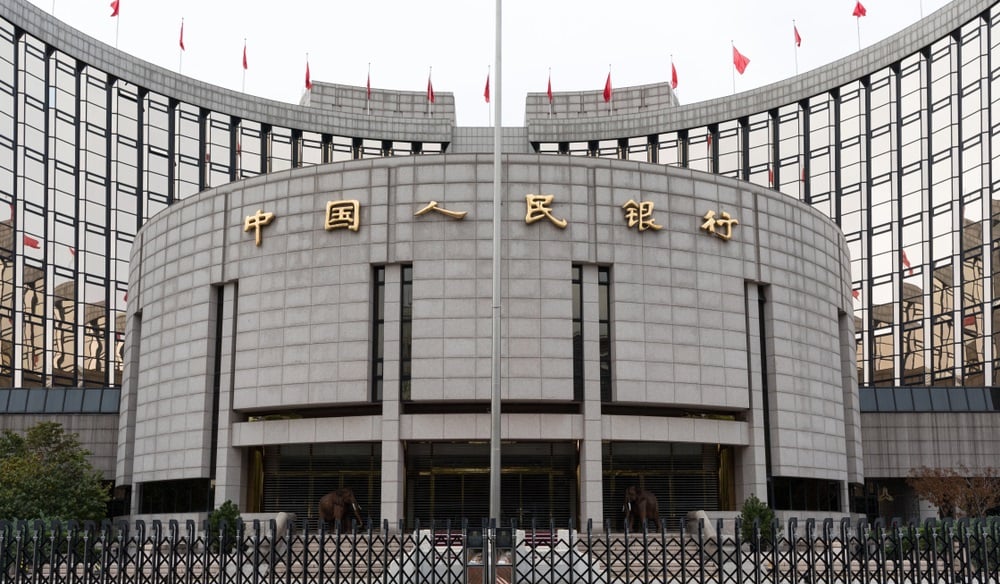
The Financial Distributed Ledger Technology Security Specification (JR/T 0184—2020) comes as a result of joint efforts between major banks such as Industrial and Commercial Bank of China, Agricultural Bank of China, and Bank of China, under the guidance of the People’s Bank of China (PBOC). The main purpose of the document issued earlier in February is to standardize the deployment of blockchain technology in the financial field, Chinese crypto news outlet 8btc reported.
With the new regulation, the central bank of China puts an emphasis on improving information security of distributed ledger technology (DLT) applications. Organizations engaged in the development of blockchain systems for the financial sector as well as various service providers that are using DLT-based solutions are expected to comply with the standards in their activities.
The 35-page instruction paper demands the implementation of secure financial DLT technologies and addresses various aspects of such systems like basic hardware and software, cryptographic algorithms, consensus protocols, communication between nodes, smart contracts, operational and maintenance requirements. The document also deals with matters related to identity management, privacy protection, compliance support, and governance mechanisms.
On the central government level, China turned its attention to blockchain last year when the General Secretary of the Communist Party Xi Jinping stated that the country should step up research in the emerging field. At a politburo meeting, the Chinese president insisted on speeding up development in the sector so that the People’s Republic could gain an edge, given the importance of DLT in the new round of technological innovation and industrial transformation.
Technical Committees Introduce Government Standards in Various Sectors
In November 2019, Beijing announced the establishment of technical committees tasked to introduce standardization in various fields, from baby products and sharing economy to photovoltaic systems. The standards drafted for each sphere will be used to coordinate government objectives across the country and throughout the entire economy. Approved and published regulations will be reviewed every five years.
A working group was created for the blockchain space, too. Chinese authorities believe that as many DLT initiatives originate from the financial and banking sector, standardization will facilitate deployment of new systems in accordance with established universal security requirements. Officials also want to ensure a “healthy development” of the industry producing and implementing blockchain solutions.

Over 37,000 blockchain businesses operate in China, according to the country’s company information portal Tianyancha.com. More than a third of these entities have been registered in the past year alone. China is also a leader by number of filed blockchain-related patent applications which reached almost 13,000 in October, or over 53% of the global total, shows data compiled by the World Intellectual Property Organization.
The PBOC is also working intensively to prepare the launch of a digital version of the national fiat and test the new Digital Currency Electronic Payment (DCEP) system with the help of four state-owned commercial banks and three leading telecom operators. The digital yuan is said to be partially based on blockchain technology but as news.Bitcoin.com reported recently, the Chinese central bank has filed 84 patents relating to the digital currency.
What do you think of China’s decision to adopt security standards for blockchain applications in the financial sector? Share your thoughts in the comments section below.
Images courtesy of Shutterstock.
Do you need to track down a Bitcoin transaction? With our Bitcoin Explorer tool, you can search by transaction ID, address, or block hash to find specific details, and for a look at the broader crypto space explore our Bitcoin Charts tool.
The post China Adopts Security Standards for Blockchain Applications in the Financial Sector appeared first on Bitcoin News.
from Bitcoin News https://ift.tt/2STD5sX
Comments
Post a Comment