Mempool Clog: Bitcoin Hashrate Drops 40%, Backlog Shows Over 100K Unconfirmed Transactions

The Bitcoin network hashrate has dropped significantly over the last four days sliding from a high of 161 exahash per second (EH/s) to 90 EH/s on October 27. Today, the Bitcoin hashrate has improved a hair as the network’s security is currently hovering around 100 EH/s. However, the mempool log of unconfirmed transactions has spiked to levels not seen since the 2017 highs.

On Wednesday, October 28, 2020, the Bitcoin (BTC) hashrate is trying to regain what was lost during the last four days. According to statistics, since the October 27 high of 161 EH/s, the network hashrate is down -37.88% at 100 EH/s today. The overall SHA256 hashrate lost more than 40% between the highest point to the lowest metric recorded.

Analysts assume the drop was due to the end of the rainy season in Sichuan China and its been said that miners have been migrating to different regions in the country. The significant drop follows the network’s all-time high when the hashrate spiked to 174 EH/s on October 14, 2020.
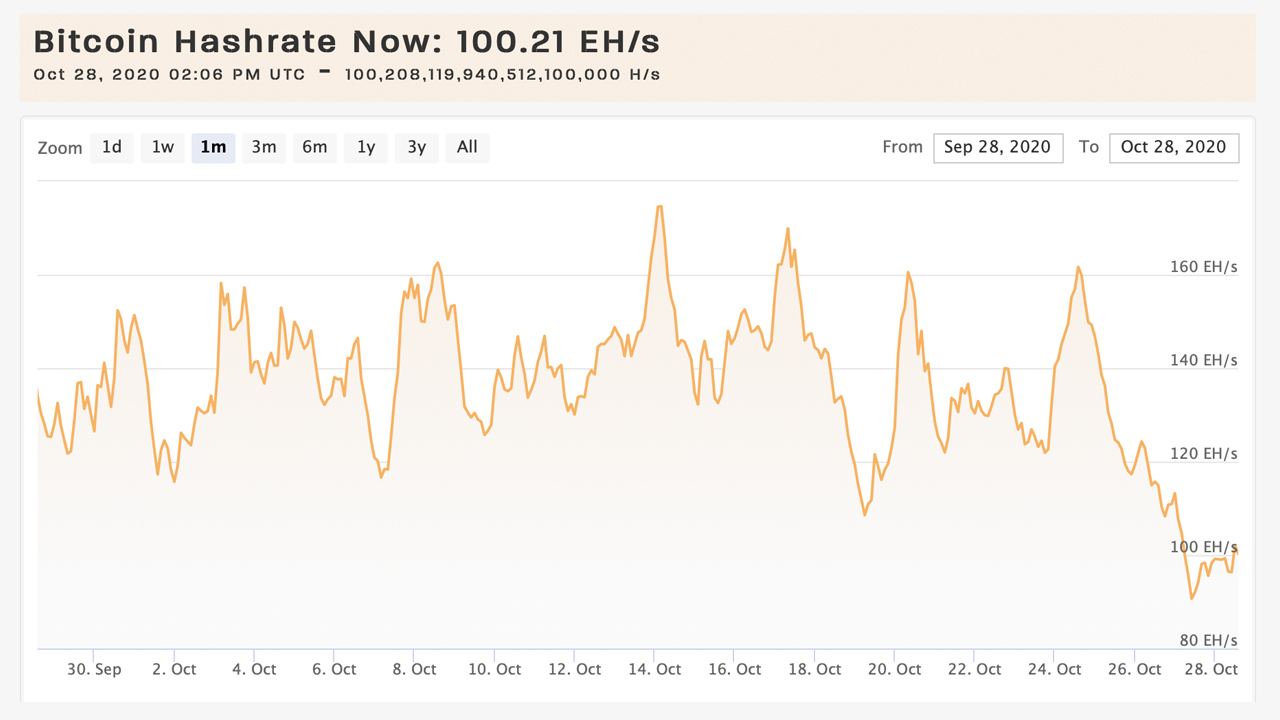
The executive from the mining organization Hashr8, Thomas Heller, spoke about the hashrate drop on Twitter on October 26.

“Looking at the top 10 pools, we can see approx 22 EH/s left the Bitcoin network,” Heller tweeted. “Not a precise measure of course, but overlaid with the number of blocks mined per day, we can get a rough idea of the hashrate change. This coming difficulty adjustment is one to look forward to,” the executive added.
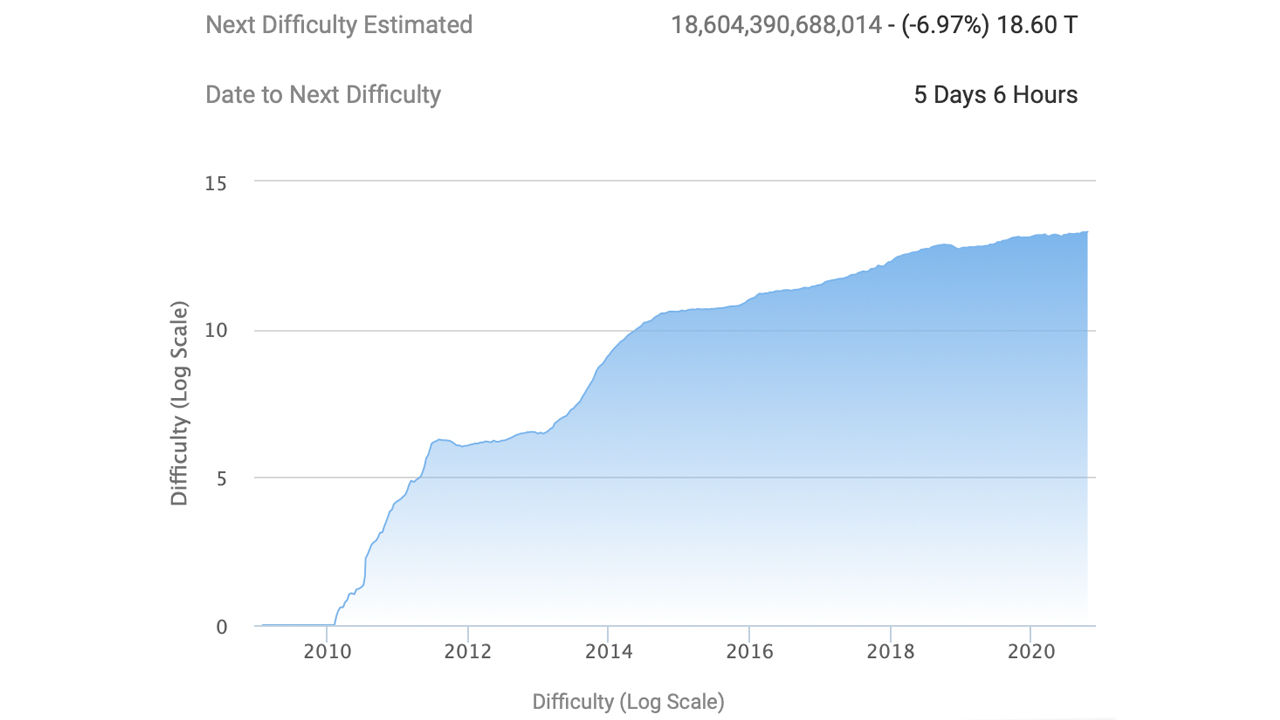
Difficulty data for October 28, 2020.

Not too long ago, BTC’s mining difficulty dropped from the highest point ever at 19.69T to today’s range of 18.60T. With the hashrate so low, miners may see the difficulty drop even lower making it easier to mine bitcoins.

The next expected difficulty change however is still five days away scheduled for on or around November 2, 2020. Today there are 17 mining pools pointing their hash at the BTC chain. The top mining operation today is F2pool with 17.93 EH/s under the hood. F2pool is followed by Poolin, Btc.com, Antpool, and Binance Pool.

Data from bitcoinfees.cash recorded at 12:00 p.m. (EST) on October 28, 2020.

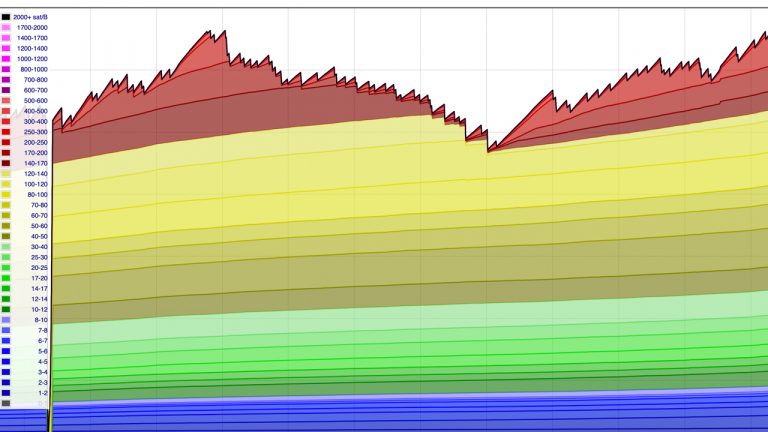
Now because the hashrate dropped and it has coincided with the price of bitcoin (BTC) rising, network fees have jumped considerably. Stats from bitcoinfees.cash indicates the next BTC block fee $8.26 and the current median fee is $5.10 per transaction.

Data from the mempool shows there’s 121,000+ unconfirmed transactions waiting to be confirmed. Of course, the wait times have pushed the transaction fee market up because people are paying higher fees to get their BTC transactions confirmed.

For now, miners will have to be patient and wait out the five days in order for the difficulty to drop lower. It is uncertain how much migration is happening in China right now as far as Sichuan operations are concerned, but most of the hashrate losses stemmed from China-based mining pools.

What do you think about the big hashrate drop during the last four days? Let us know what you think in the comments section below.

The post Mempool Clog: Bitcoin Hashrate Drops 40%, Backlog Shows Over 100K Unconfirmed Transactions appeared first on Bitcoin News.


from Bitcoin News https://ift.tt/3oBz22h

Comments

Popular posts from this blog

Mt Gox Creditors Updated, Trustee Says Rehabilitation Custodian Is ‘Currently Preparing to Make Repayments’

On August 31, 2022, the Mt Gox trustee Nobuaki Kobayashi explained in a recent letter that the rehabilitation custodian is “currently preparing to make repayments” to Mt Gox creditors. Trustee Updates Mt Gox Creditors — Repayment Date and Exchange Still Unknown Last week speculation and rumors concerning the release of 140K bitcoin ( BTC ) from Mt Gox littered social media platforms and headlines. Bitcoin.com News covered the situation six days ago as a number of people and Mt Gox creditors called the rumors “ fake news .” During that same period of time, a bitcoin whale transferred 10,000 BTC to unknown wallets, and a 2018 annotation , heuristics, and clustering methods show the funds likely originated from the June 2011 Mt Gox hacks. Following the mysterious whale transfer, last Wednesday, Mt Gox published an official update from the court trustee Nobuaki Kobayashi that explains the court is “currently preparing to make repayments” to creditors. Mt Gox creditors have been wait...

Fidelity Discusses Bitcoin as Portfolio Insurance — Could Soon Stand in ‘Stark Contrast’ to Path Fiat Currencies Take

Fidelity Digital Assets, a subsidiary of Fidelity Investments, says that bitcoin could be considered portfolio insurance. The firm notes that the cryptocurrency “may soon stand in stark contrast to the path that the rest of the world and fiat currencies may take — namely the path of increased supply, additional currency creation, and central bank balance sheet expansion.” Fidelity Says Bitcoin Could Be Portfolio Insurance Fidelity Digital Assets, a subsidiary of Fidelity Investments, recently published a research study titled “The Rising Dollar and Bitcoin.” The research outlines “how bitcoin could be considered portfolio insurance” as the rising dollar impacts global currency markets. “The strengthening U.S. dollar is wreaking havoc among other countries and may put pressure on the Federal Reserve to soon reverse its tightening monetary actions, something that has precedent based on 1985’s Plaza Accord,” Fidelity explained. In addition, “more monetary debasement may be needed to ...

Economists Discuss Russia, China Potentially Developing Gold-Backed Currency That Could Undermine US Dollar

Economists have weighed in on reports that China and Russia may be developing a new gold-backed currency that could undermine the U.S. dollar’s status as the world’s primary reserve currency. Russia and China May Be Developing Gold-Backed Currency Several experts have shared their views on Russia and China potentially creating a new gold-baked currency, Fox Business reported Saturday, emphasizing that China has been buying up huge quantities of gold while Russia was forced off the U.S. dollar due to sanctions imposed on the country following its invasion of Ukraine. The news outlet noted that some experts have cautioned that these moves, along with the closer relationship that has developed between Moscow and Beijing, point to the likelihood of China attempting to launch a gold-backed currency. However, neither Russia nor China has officially confirmed plans for such a currency. Craig Singleton, senior fellow at the Foundation for Defense of Democracies and a former U.S. diplomat,...