Bitcoin Fees Tap $60 per Transaction, Users Say Fees Restrict Adoption, Others ‘Embrace’ the BTC Fee Pump

On April 21, Bitcoin network fees touched an all-time high according to a number of transaction fee aggregators. The average bitcoin transaction fee is approximately $59.88 and the median fee is around $26.44 USD per transfer.
Bitcoin Fees Climb Sky High After the Hashrate Plummeted
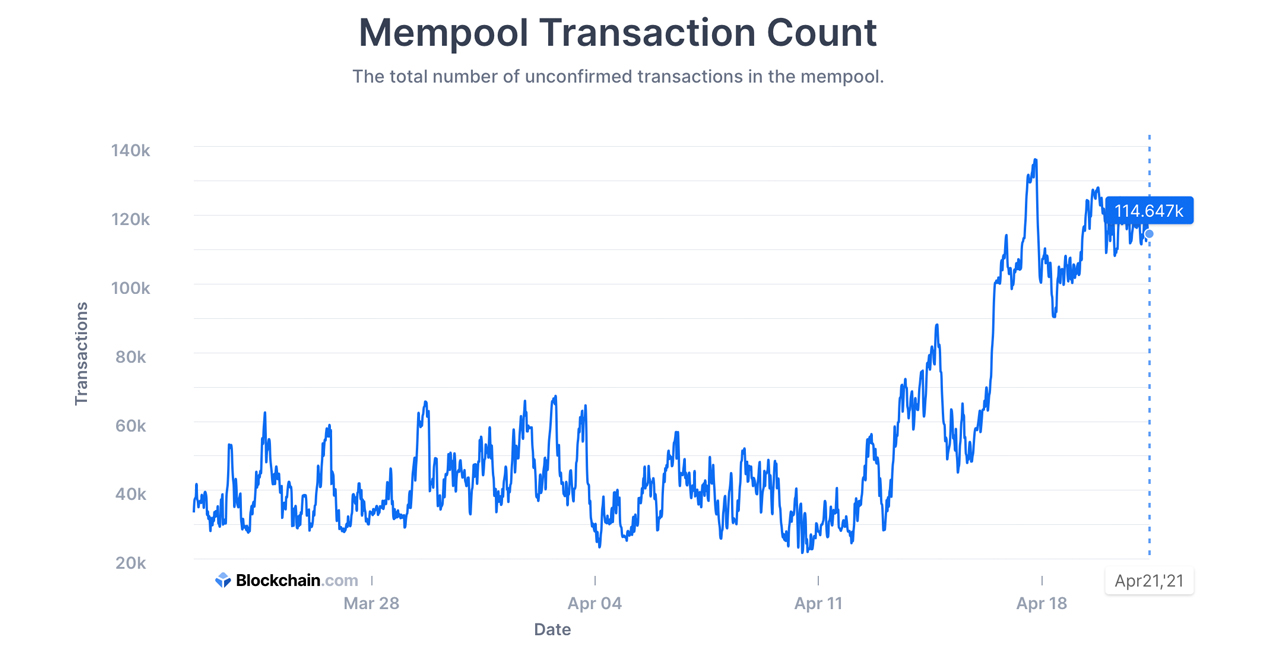
The cost to send a bitcoin (BTC) transaction has never been higher in terms of average fees. In terms of the median value, charts show median fees are nearing an all-time high (ATH) as well, but are not quite there yet. The average fee rate touched an ATH of around $59.88 per transaction on Tuesday evening (EST). Blockchain.com’s “mempool transaction count,” which shows the total number of unconfirmed transactions in the mempool, is around 114,000 transactions waiting in the backlog.
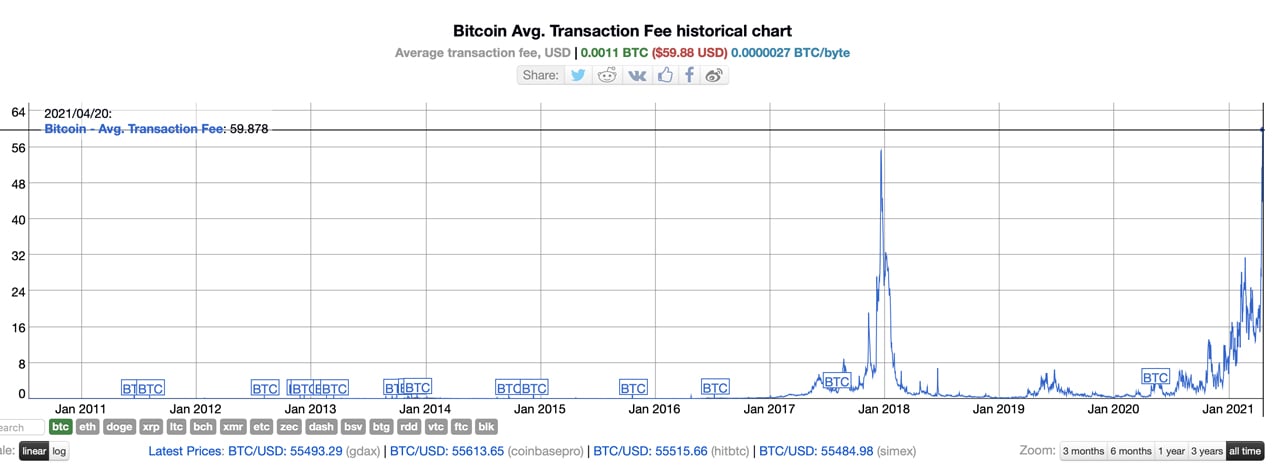
BTC fees have been growing higher as the price per coin started swelling, but network fees really started accelerating northbound after the hashrate dropped and market carnage that took place this past weekend.
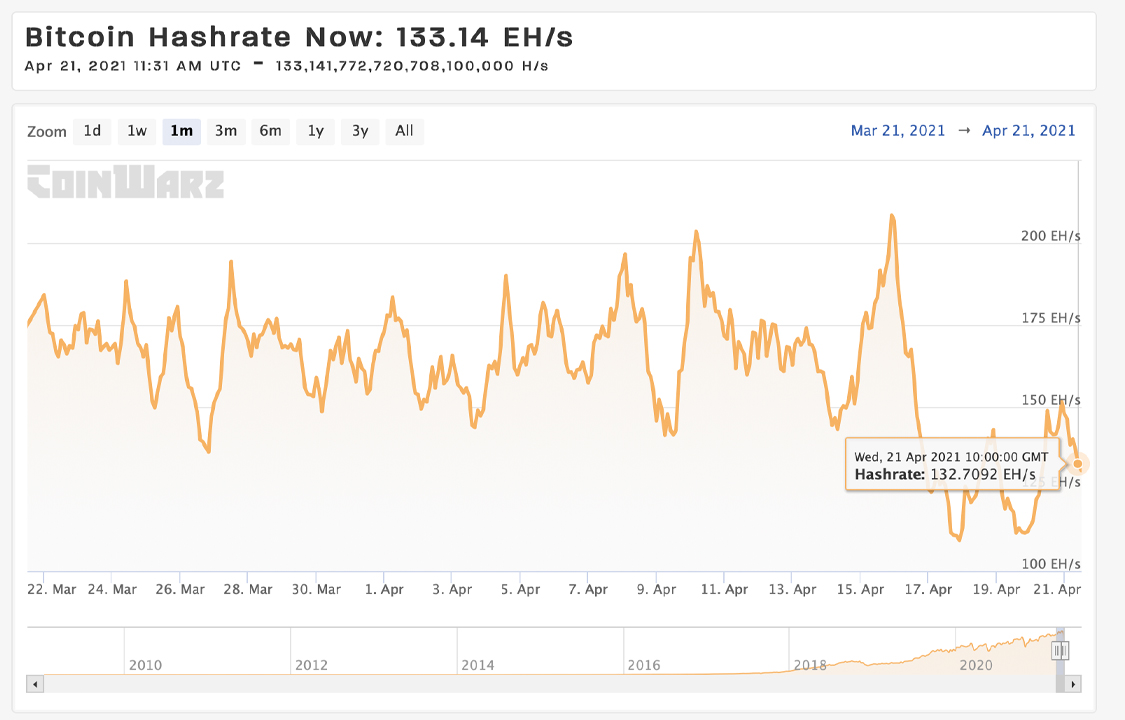
At the time of publication, the overall hashrate is 133.14 exahash per second (EH/s) which is 38% lower than the ATH recorded on April 15, 2021, at 218 EH/s. When a significant fraction of hashrate drops the miners’ processing blocks slow down, which means the mempool or transaction queue starts to climb.
Because block space is only 1MB and developers have not addressed the issue besides relying on offchain and sidechain solutions, the space becomes scarce and a bidding war happens. Bitcoiners call this the “fee market” and people compete with higher transaction fees in order to get faster confirmation times.
‘Fees Are Designed to Pump Forever— Embrace Them’
It is believed by some proponents that additional fees will increase the number of miners joining the network. People have also asserted that higher fees will push people toward the Lightning Network (LN), which has seen some capacity increases in recent times.
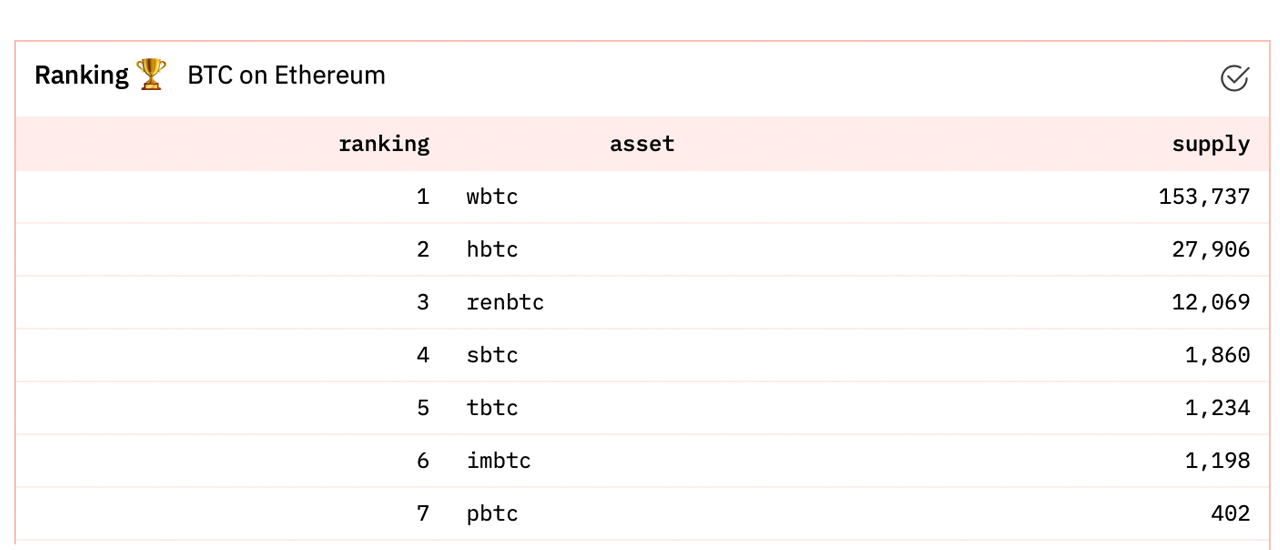
However, the LN pales in comparison to other chains that are moving bitcoin via wrapping or bridge technology. Some bitcoiners are telling people they should expect “a higher fee future,” while others have lots of faith in alternative solutions.
“If you were not ready for these high bitcoin fees do not panic. Fees should come down substantially in a few weeks after the next difficulty adjustment,” Matt Odell tweeted on April 19. “That said, I expect fees to trend up in general so after that adjustment, you really need to prepare for a higher fee future.”
Odell added:
Sustained high fees are expected and necessary to prevent denial of service (spam) attacks that can threaten decentralization and therefore censorship resistance. Sustained high fees will secure the bitcoin network long term. Fees are designed to pump forever. Embrace them.
User Complains ‘Fewer People Can Afford to Use Bitcoin,’ Bitcoiners Put Faith in Solutions That Haven’t Gained Traction
However, lots of people disagreed with Odell’s statement and one person replied: “Sustained high fees ruin decentralization, as less and less people can afford to use Bitcoin. Including LN open/close channels, BTW. Less adoption = less business and users running nodes. Block size should be bumped. It’s been [four] years and consumer [hardware] can handle more.” Others are still hoping that different solutions, that have yet to gain much traction, will fix bitcoin’s scaling woes.
“Is it controversial to think RSKsmart is probably going to become larger and more popular than [the] Lightning Network and Liquid over the next year or so?” asked Kyle Torpey. “Copy/Pasting the Ethereum tech stack might lead to high growth over the short term,” he added. Although, the number of bitcoin used on the RSK network is tiny compared to the massive amounts of BTC held on Ethereum. There’s a whopping 198,407 BTC ($11 billion) being leveraged on the ETH chain and that doesn’t count Binance’s wrapped BTC project (54,598 BEP2).
The Block Crypto’s Larry Cermak replied to Torpey’s tweet and said: “Sovryn is the only one I’m aware of and still very little traction. UI/UX is incredibly weak.”
Whatever the case may be, after 2017’s high fees which jumped to $50 per transaction, solutions like the Lightning Network, Liquid, and RSK have not helped toward reducing fees. Despite trust model debates, Ethereum is Bitcoin’s largest sidechain by total value locked even as fees on that network grow larger. This has pushed a lot of use toward the Binance smartchain and other networks. Moreover, an Ethereum sidechain is being built on the Bitcoin Cash network in an attempt to cut fees down to extremely inexpensive rates.
For now, Bitcoin (BTC) network participants will simply have to deal with the fees and maybe even embrace them like Odell says. Yet this seems to be pushing users toward alternative blockchains and feeds the very thing maximalists hate— altcoins.
What do you think about the high bitcoin fees in recent days? Let us know what you think about this subject in the comments section below.
from Bitcoin News https://ift.tt/3dELTwY
Comments
Post a Comment