Group of Salvadorans Take to the Streets to Protest El Salvador’s New Bitcoin Law

Group of Salvadorans Take to the Streets to Protest El Salvador's New Bitcoin Law

While some Salvadorans situated near Playa El Zonte beach like the new bitcoin tender law implemented by Nayib Bukele’s regime, a number of other citizens dislike the law. This week, regional reports show citizens from El Salvador have taken to the streets to protest the bitcoin tender law.

Salvadoran Protestors Say Bitcoin Is ‘Too Volatile’ and Like ‘Playing the Lottery’

One might think from some of the fluffy reports stemming from a number of cryptocurrency magazines that all is swell in El Salvador in regard to the new bitcoin law. However, during the first week of July, a survey conducted by Disruptiva polled 1,233 people residing in El Salvador and a majority of Salvadorans said they were skeptical of bitcoin as a currency. Following the implementation of the new bitcoin tender law, leaked reports claimed Nayib Bukele’s government cohorts were planning to launch a stablecoin.
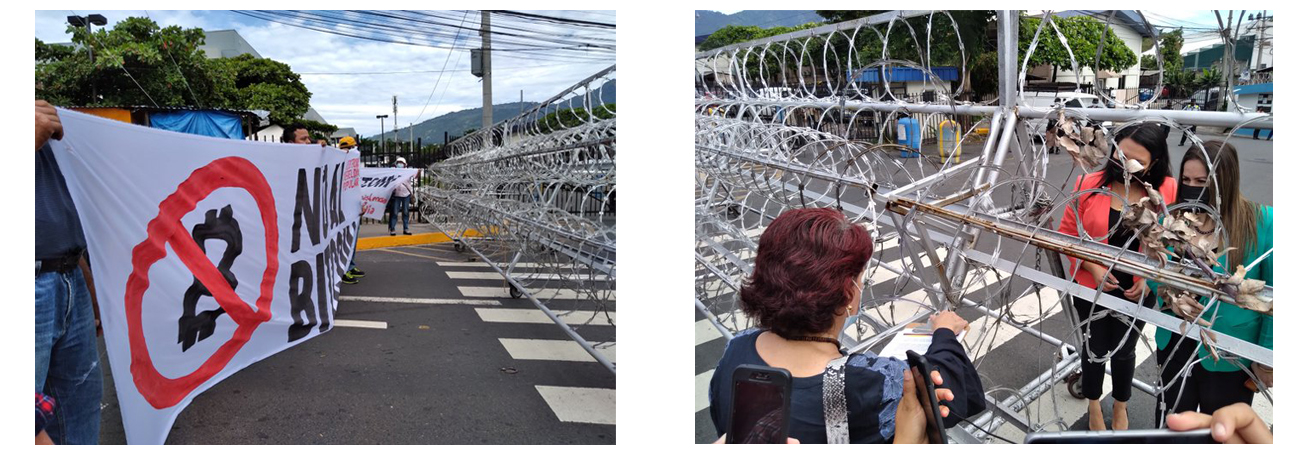
Now a regional report from the news outlet El Mundo shows a number of Salvadorans have taken to the streets to protest the bitcoin law. Marchers gathered together to speak out against Bukele’s tender law and said the crypto asset was “too volatile.”

There’s also a resistance group called the “Popular Resistance and Rebellion Block” group, which has written a letter to Bukele’s regime saying the law is unconstitutional. The group says bureaucrats under the control of Bukele did not consult the citizenry first and they stressed the president’s move was akin to playing “the lottery.”

Nayib Bukele Is Considered a ‘Dictator’

Nayib Bukele is considered an authoritarian leader and recently mandated that citizens must take Covid-19 vaccines, despite the pushback against the experimental drugs. A number of mainstream American news publications have called El Salvador’s president a “dictator.” Last May, Bukele’s New Ideas Party fired several Supreme Court members and the attorney general.
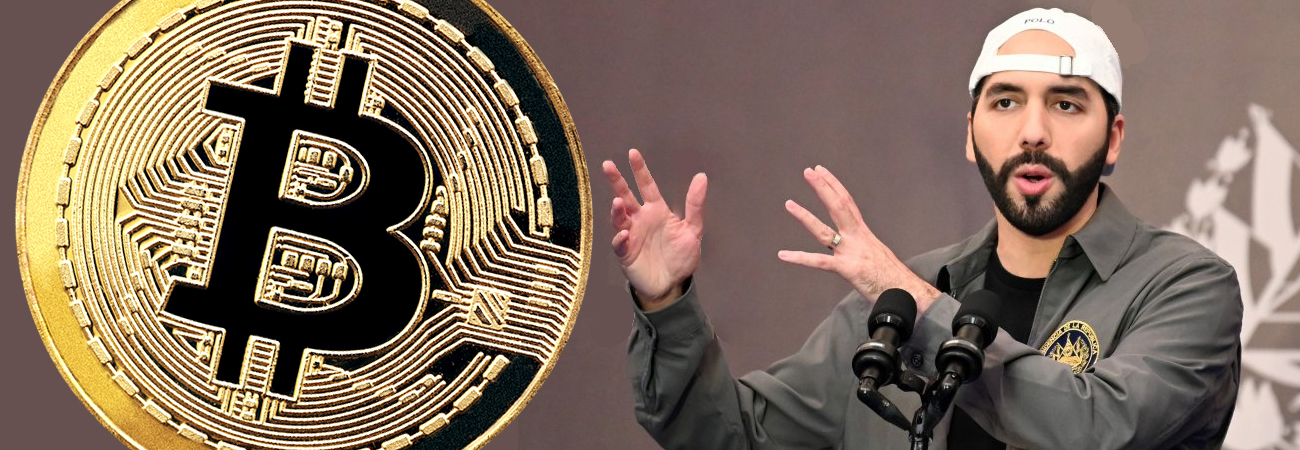
Despite leaning toward bitcoin, El Salvador’s president has been called a “dictator.” In recent times he’s been criticized for mandating Covid-19 vaccines on the populace without full consent. Twenty government institutions linked to the Bukele administration were under investigation for manipulation and corruption. He then fired all those who were involved in the investigation. The news publication El Faro has also accused Bukele of secretly negotiating a deal with Mara Salvatrucha, the most powerful gang in El Salvador.

Bukele even tweeted about the removal and exclaimed the representatives had been “dismissed.” People believe the members were fired because the Supreme Court ruled a few times that Bukele made unconstitutional mistakes. The Salvadoran attorney general was investigating several of the Bukele regime’s ministers.

On May 4, U.S. vice president Kamala Harris spoke about the Salvadoran nation in a speech. “Just this weekend, we learned that the Salvadoran parliament moved to undermine its nation’s highest court. An independent judiciary is critical to a healthy democracy and a strong economy. On this front — on every front — we must respond.”

Resistance Group Says ‘Bitcoin Serves the Elite and Ill-Gotten Money’

Protestors who dislike the new bitcoin law also believe Bukele’s New Ideas Party is in the wrong. The Popular Resistance and Rebellion Block group stressed:

Bitcoin only serves some large businessmen, especially those linked to the government, to launder ill-gotten money.

While the supermajority in the Salvadoran congress passed the law, bitcoin (BTC) won’t officially be recognized until September 7, 2021. Protestors hope that in the interim, Salvadoran lawmakers will stop Bukele’s New Ideas Party from successfully implementing the legislation. Meanwhile, a few Salvadorans disliked the group’s protest and said: “How can they be called resistance and rebellion? Hahaha… Bitcoin is true financial freedom.”

“Sad to see people who seek to go backward and limit the growth of the country,” another individual added.

What do you think about the protestors who dislike the new Salvadoran bitcoin tender law? Let us know what you think about this subject in the comments section below.


from Bitcoin News https://ift.tt/3BEQolt

Comments

Popular posts from this blog

Mt Gox Creditors Updated, Trustee Says Rehabilitation Custodian Is ‘Currently Preparing to Make Repayments’

On August 31, 2022, the Mt Gox trustee Nobuaki Kobayashi explained in a recent letter that the rehabilitation custodian is “currently preparing to make repayments” to Mt Gox creditors. Trustee Updates Mt Gox Creditors — Repayment Date and Exchange Still Unknown Last week speculation and rumors concerning the release of 140K bitcoin ( BTC ) from Mt Gox littered social media platforms and headlines. Bitcoin.com News covered the situation six days ago as a number of people and Mt Gox creditors called the rumors “ fake news .” During that same period of time, a bitcoin whale transferred 10,000 BTC to unknown wallets, and a 2018 annotation , heuristics, and clustering methods show the funds likely originated from the June 2011 Mt Gox hacks. Following the mysterious whale transfer, last Wednesday, Mt Gox published an official update from the court trustee Nobuaki Kobayashi that explains the court is “currently preparing to make repayments” to creditors. Mt Gox creditors have been wait...

Fidelity Discusses Bitcoin as Portfolio Insurance — Could Soon Stand in ‘Stark Contrast’ to Path Fiat Currencies Take

Fidelity Digital Assets, a subsidiary of Fidelity Investments, says that bitcoin could be considered portfolio insurance. The firm notes that the cryptocurrency “may soon stand in stark contrast to the path that the rest of the world and fiat currencies may take — namely the path of increased supply, additional currency creation, and central bank balance sheet expansion.” Fidelity Says Bitcoin Could Be Portfolio Insurance Fidelity Digital Assets, a subsidiary of Fidelity Investments, recently published a research study titled “The Rising Dollar and Bitcoin.” The research outlines “how bitcoin could be considered portfolio insurance” as the rising dollar impacts global currency markets. “The strengthening U.S. dollar is wreaking havoc among other countries and may put pressure on the Federal Reserve to soon reverse its tightening monetary actions, something that has precedent based on 1985’s Plaza Accord,” Fidelity explained. In addition, “more monetary debasement may be needed to ...

Economists Discuss Russia, China Potentially Developing Gold-Backed Currency That Could Undermine US Dollar

Economists have weighed in on reports that China and Russia may be developing a new gold-backed currency that could undermine the U.S. dollar’s status as the world’s primary reserve currency. Russia and China May Be Developing Gold-Backed Currency Several experts have shared their views on Russia and China potentially creating a new gold-baked currency, Fox Business reported Saturday, emphasizing that China has been buying up huge quantities of gold while Russia was forced off the U.S. dollar due to sanctions imposed on the country following its invasion of Ukraine. The news outlet noted that some experts have cautioned that these moves, along with the closer relationship that has developed between Moscow and Beijing, point to the likelihood of China attempting to launch a gold-backed currency. However, neither Russia nor China has officially confirmed plans for such a currency. Craig Singleton, senior fellow at the Foundation for Defense of Democracies and a former U.S. diplomat,...