
10 Crypto Exchanges File for Registration With Korean Regulators Ahead of Deadline

10 Crypto Exchanges File for Registration With Korean Regulators Ahead of Deadline

Cryptocurrency exchanges in South Korea have until midnight on Friday to register with financial authorities in order to continue operating legally. Only 10 digital asset trading platforms have already submitted their documents to the Korean anti-money laundering body.

Compliance Deadline for New Korean Crypto Regulations Expires Friday

Registering with Korea’s Financial Intelligence Unit (FIU) is a key requirement for both local and foreign crypto exchanges providing services to Korean investors under the tougher new regulations coming into force after Sept. 24. A total of 10 out of dozens of coin trading platforms have so far filed applications with FIU, the anti-money laundering division of the Financial Services Commission (FSC). The group includes Upbit, Bithumb, Coinone, Korbit, and Flybit, Yonhap reported, quoting the body on Friday.
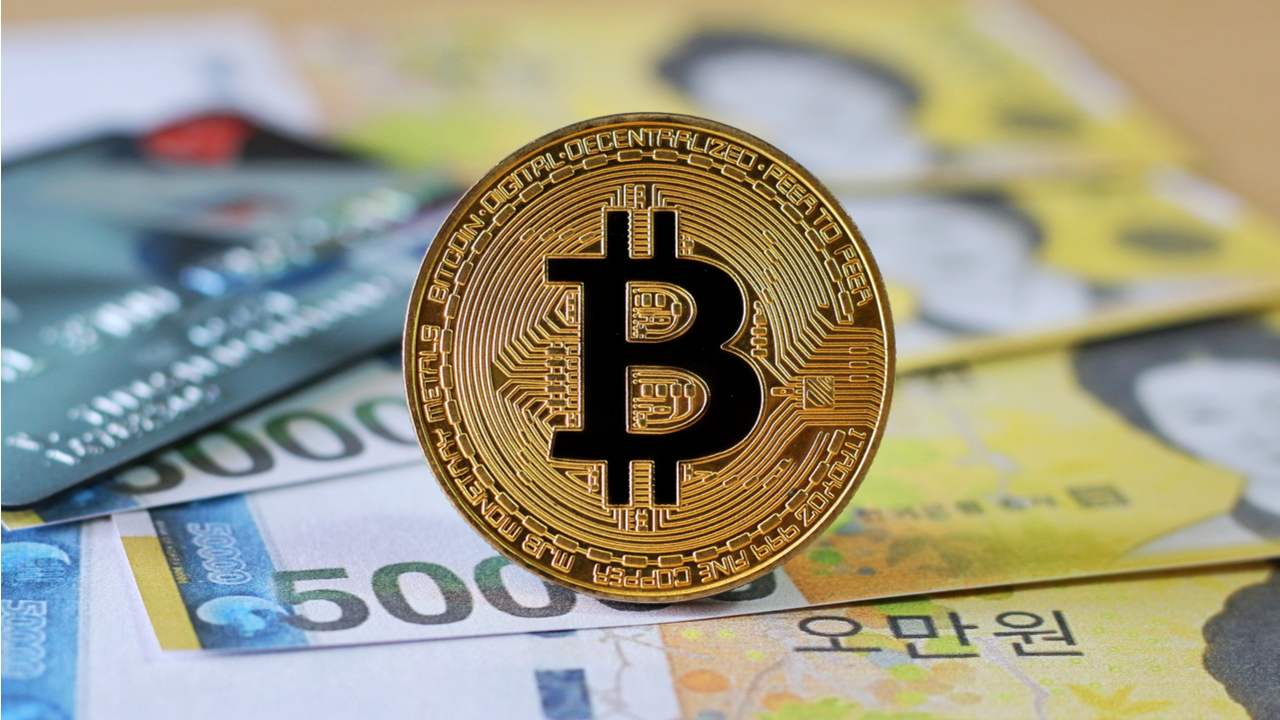
10 Crypto Exchanges File for Registration With Korean Regulators Ahead of Deadline

South Korea’s revised Special Funds Act, which introduces the stricter rules, took effect on March 25 and will be enforced now, after a six-month grace period. According to its provisions, digital asset exchanges also need to obtain an Information Security Management System (ISMS) certificate from the Korea Internet and Security Agency. Financial officials have announced that 28 out of 66 exchanges have acquired the certificate up to this point.

Cryptocurrency exchanges are also required to partner with domestic banks on the issuance of real-name bank accounts. If they don’t do that, they will not be able to offer trading pairs with Korean fiat currency. Only the top four platforms – Bithumb, Upbit, Coinone, and Korbit – have secured real-name account deals with commercial banks as the financial institutions fear exposure to crypto-related risks like money laundering.

Mid-size exchanges such as Flybit, Coredax, and Foblgate are suspending Korean won pairs, the report notes. While the exact turnover on these and smaller platforms is hard to estimate, market observers quoted by the Korea Herald have said that they account for between 5% and 7% of the total amount of cryptocurrency traded in the Korean market. In light of the upcoming regulations, some exchanges have also delisted certain “high-risk” coins.

As Bitcoin.com News reported earlier this week, around 60 cryptocurrency exchanges are expected to discontinue all or some of their services targeting Korean investors. At the time, only Korea’s largest crypto trading platform, Upbit, had been licensed to conduct business in the country after the Financial Intelligence Unit accepted and reviewed the report filed by its operator, Dunamu Inc.

Cryptocurrency exchanges that don’t submit the necessary documents such as a written intent to do business by the end of the day will be forced to close down, the national public broadcaster KBS reported, quoting the FSC. Operators that fail to comply with the new rules but continue their activities without a license face up to five years in prison or fines of up to 50 million won (over $42,000).

Do you think more cryptocurrency exchanges will be able to meet the new Korean regulatory requirements in the future? Share your expectations in the comments section below.


from Bitcoin News https://ift.tt/3u8Xlrq

Comments

Popular posts from this blog

Mt Gox Creditors Updated, Trustee Says Rehabilitation Custodian Is ‘Currently Preparing to Make Repayments’

On August 31, 2022, the Mt Gox trustee Nobuaki Kobayashi explained in a recent letter that the rehabilitation custodian is “currently preparing to make repayments” to Mt Gox creditors. Trustee Updates Mt Gox Creditors — Repayment Date and Exchange Still Unknown Last week speculation and rumors concerning the release of 140K bitcoin ( BTC ) from Mt Gox littered social media platforms and headlines. Bitcoin.com News covered the situation six days ago as a number of people and Mt Gox creditors called the rumors “ fake news .” During that same period of time, a bitcoin whale transferred 10,000 BTC to unknown wallets, and a 2018 annotation , heuristics, and clustering methods show the funds likely originated from the June 2011 Mt Gox hacks. Following the mysterious whale transfer, last Wednesday, Mt Gox published an official update from the court trustee Nobuaki Kobayashi that explains the court is “currently preparing to make repayments” to creditors. Mt Gox creditors have been wait...

Fidelity Discusses Bitcoin as Portfolio Insurance — Could Soon Stand in ‘Stark Contrast’ to Path Fiat Currencies Take

Fidelity Digital Assets, a subsidiary of Fidelity Investments, says that bitcoin could be considered portfolio insurance. The firm notes that the cryptocurrency “may soon stand in stark contrast to the path that the rest of the world and fiat currencies may take — namely the path of increased supply, additional currency creation, and central bank balance sheet expansion.” Fidelity Says Bitcoin Could Be Portfolio Insurance Fidelity Digital Assets, a subsidiary of Fidelity Investments, recently published a research study titled “The Rising Dollar and Bitcoin.” The research outlines “how bitcoin could be considered portfolio insurance” as the rising dollar impacts global currency markets. “The strengthening U.S. dollar is wreaking havoc among other countries and may put pressure on the Federal Reserve to soon reverse its tightening monetary actions, something that has precedent based on 1985’s Plaza Accord,” Fidelity explained. In addition, “more monetary debasement may be needed to ...

Economists Discuss Russia, China Potentially Developing Gold-Backed Currency That Could Undermine US Dollar

Economists have weighed in on reports that China and Russia may be developing a new gold-backed currency that could undermine the U.S. dollar’s status as the world’s primary reserve currency. Russia and China May Be Developing Gold-Backed Currency Several experts have shared their views on Russia and China potentially creating a new gold-baked currency, Fox Business reported Saturday, emphasizing that China has been buying up huge quantities of gold while Russia was forced off the U.S. dollar due to sanctions imposed on the country following its invasion of Ukraine. The news outlet noted that some experts have cautioned that these moves, along with the closer relationship that has developed between Moscow and Beijing, point to the likelihood of China attempting to launch a gold-backed currency. However, neither Russia nor China has officially confirmed plans for such a currency. Craig Singleton, senior fellow at the Foundation for Defense of Democracies and a former U.S. diplomat,...