Brazilian Senate Approves Cryptocurrency Law Project

brazilian

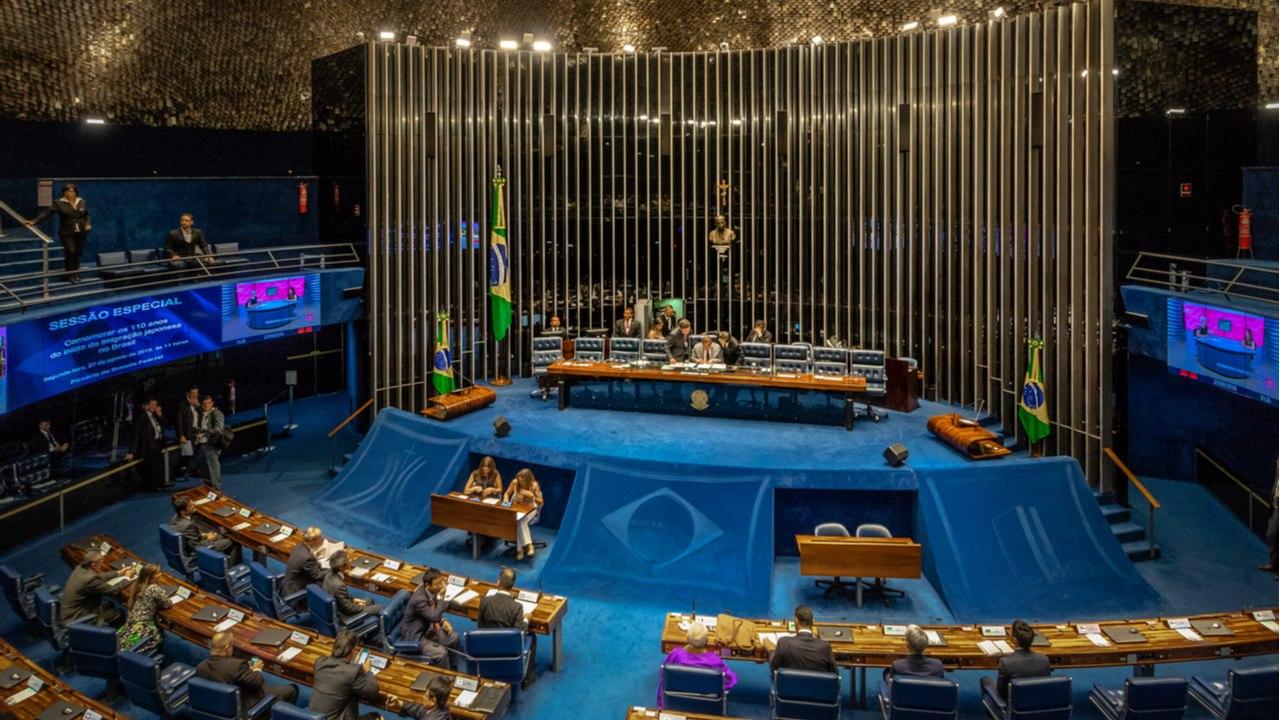
The Brazilian Senate has approved a recently presented cryptocurrency policy, advancing the project to discussions in the deputy chamber. The proposal will have to be greenlighted by the deputies of Congress and signed by President Jair Bolsonaro to be approved as law. The project presented is the result of the fusion of several law projects dealing with crypto.

Brazilian Senate Greenlights Crypto Law Project

The Brazilian Senate has greenlighted a cryptocurrency law project that seeks to give more clarity and protect users from different cryptocurrency-related scams that have happened in the country. The project will now advance to the Chamber of Deputies, which will be responsible for debating and approving or rejecting this new project.

The project was elaborated by choosing different projects that were presented earlier by taking some parts from one, and some from another. Senator Flávio Arns, senator Styvenson Valentim, senator Soraya Thronicke, and federal deputy Aureo Ribeiro all contributed to the final text. This was announced by local media before, which informed the institution was taking steps to achieve the approval of a cryptocurrency law before the end of Q2.

While discussing the law project, rapporteur Iraja Abreu stated:

We advanced the discussions of the report so that we could here today finally vote on this matter of regulation of crypto assets… The central bank was constantly demanding Congress to position ourselves in relation to a regulatory framework that could understand the dimension of this new business environment.

Law Project Dispositions

The cryptocurrency law project approved by the Brazilian senate establishes the concept of cryptocurrencies and virtual asset service providers (VASPs), but leaves the faculty of naming the institution destined to oversee them to the Executive branch of the government. In earlier iterations of this project, this faculty was assigned to the Central Bank of Brasil. The executive branch of the government will be able to assign these tasks to an existing organization or create one just for this.

The subject of non-fungible tokens (NFTs) was left outside the scope of the regulation, with the regulation of these tools being left to another law project due to their special traits. However, the document does amend the penal code of the country to include a new crime, denominated “fraud in the provision of services of virtual assets, securities, or financial assets,” with penalties going from imprisonment from two to six years plus fines.

The document also proposes tax benefits for cryptocurrency mining operations that use 100% renewable energies and become carbon neutral.

What do you think about the approval of the cryptocurrency law by the Brazilian senate? Tell us in the comments section below.


from Bitcoin News https://ift.tt/CwJ3jiF

Comments

Popular posts from this blog

Mt Gox Creditors Updated, Trustee Says Rehabilitation Custodian Is ‘Currently Preparing to Make Repayments’

On August 31, 2022, the Mt Gox trustee Nobuaki Kobayashi explained in a recent letter that the rehabilitation custodian is “currently preparing to make repayments” to Mt Gox creditors. Trustee Updates Mt Gox Creditors — Repayment Date and Exchange Still Unknown Last week speculation and rumors concerning the release of 140K bitcoin ( BTC ) from Mt Gox littered social media platforms and headlines. Bitcoin.com News covered the situation six days ago as a number of people and Mt Gox creditors called the rumors “ fake news .” During that same period of time, a bitcoin whale transferred 10,000 BTC to unknown wallets, and a 2018 annotation , heuristics, and clustering methods show the funds likely originated from the June 2011 Mt Gox hacks. Following the mysterious whale transfer, last Wednesday, Mt Gox published an official update from the court trustee Nobuaki Kobayashi that explains the court is “currently preparing to make repayments” to creditors. Mt Gox creditors have been wait...

Fidelity Discusses Bitcoin as Portfolio Insurance — Could Soon Stand in ‘Stark Contrast’ to Path Fiat Currencies Take

Fidelity Digital Assets, a subsidiary of Fidelity Investments, says that bitcoin could be considered portfolio insurance. The firm notes that the cryptocurrency “may soon stand in stark contrast to the path that the rest of the world and fiat currencies may take — namely the path of increased supply, additional currency creation, and central bank balance sheet expansion.” Fidelity Says Bitcoin Could Be Portfolio Insurance Fidelity Digital Assets, a subsidiary of Fidelity Investments, recently published a research study titled “The Rising Dollar and Bitcoin.” The research outlines “how bitcoin could be considered portfolio insurance” as the rising dollar impacts global currency markets. “The strengthening U.S. dollar is wreaking havoc among other countries and may put pressure on the Federal Reserve to soon reverse its tightening monetary actions, something that has precedent based on 1985’s Plaza Accord,” Fidelity explained. In addition, “more monetary debasement may be needed to ...

Economists Discuss Russia, China Potentially Developing Gold-Backed Currency That Could Undermine US Dollar

Economists have weighed in on reports that China and Russia may be developing a new gold-backed currency that could undermine the U.S. dollar’s status as the world’s primary reserve currency. Russia and China May Be Developing Gold-Backed Currency Several experts have shared their views on Russia and China potentially creating a new gold-baked currency, Fox Business reported Saturday, emphasizing that China has been buying up huge quantities of gold while Russia was forced off the U.S. dollar due to sanctions imposed on the country following its invasion of Ukraine. The news outlet noted that some experts have cautioned that these moves, along with the closer relationship that has developed between Moscow and Beijing, point to the likelihood of China attempting to launch a gold-backed currency. However, neither Russia nor China has officially confirmed plans for such a currency. Craig Singleton, senior fellow at the Foundation for Defense of Democracies and a former U.S. diplomat,...