
Bank Board Member and Dodd-Frank Co-Sponsor Barney Frank Suspects ‘Anti-Crypto’ Message Behind Signature Bank Failure
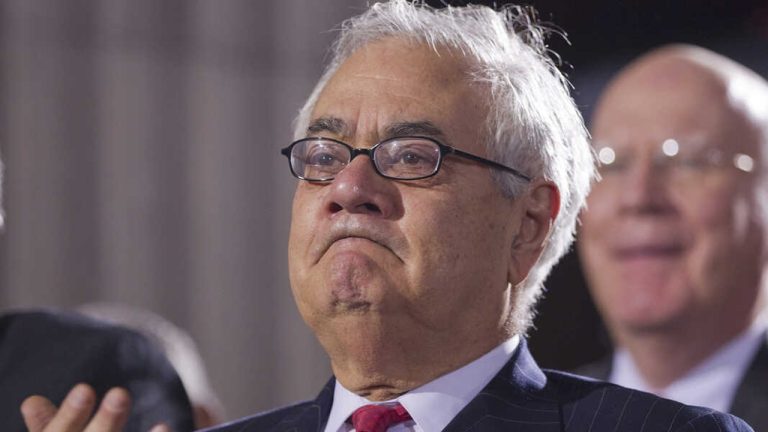
Bank Board Member and Dodd-Frank Co-Sponsor Barney Frank Suspects 'Anti-Crypto' Message Behind Signature Bank Failure

Barney Frank, a former member of the U.S. House of Representatives from Massachusetts and leading co-sponsor of the 2010 Dodd-Frank Act, discussed his opinion on the recent failure of Signature Bank. In an interview, Frank stated that he believes regulators aimed to “send a very strong anti-crypto message.” Frank, who also serves as a Signature board member, explained that he was surprised by the financial institution’s demise.

The Third-Largest Bank Failure in U.S. History: Signature Bank’s Demise was Confusing to Company Executives

New York regulators from the Department of Financial Services (DFS) announced on Sunday evening that Signature Bank (SBNY) was shut down and the Federal Deposit Insurance Corporation (FDIC) took over as the bank’s receiver. The seizure was intended to “protect depositors,” said DFS superintendent Adrienne Harris. Unlike Silvergate Bank and Silicon Valley Bank (SVB), Signature’s failure was somewhat confusing to some market observers and it was the third-largest bank failure in the United States.

On Sunday evening, superintendent Harris stated that as of December 31, 2022, Signature had about $110.36 billion in assets and total deposits of around $88.59 billion. According to Barney Frank, a Signature board member and former U.S. representative from Massachusetts, the bank’s failure was surprising to its executives. In a phone call interview with CNBC, Frank stated, “We had no indication of problems until we experienced a deposit run late Friday, which was solely due to contagion from SVB.”

Frank explained that concern began to spread last week as Signature’s customers began transferring deposits from the New York bank to larger financial institutions such as JPMorgan and Citigroup. Although the former politician saw “no real objective reason” for Signature to be seized and shut down, he suspected that U.S. regulators may have been sending a message.

“I think part of what happened was that regulators wanted to send a very strong anti-crypto message,” Frank stated. “We became the poster boy because there was no insolvency based on the fundamentals.”

Frank also mentioned that withdrawals slowed on Sunday, and Signature executives believed the situation was resolved. Additionally, he asserted that the bank’s senior staff attempted to explore “all avenues” to resolve the financial institution’s liquidity issues. Frank was a co-sponsor of the 2010 Dodd-Frank Act, which made significant changes to how U.S. banking and the financial regulatory system are currently conducted. However, the policy framework has been partially repealed, and some U.S. banks are exempt from the Dodd-Frank ruleset.

What do you think about Barney Frank’s suspicion that regulators wanted to send an anti-crypto message by shutting down Signature Bank? Do you believe this is a fair assessment or is there more to the story? Share your thoughts in the comments section below.


from Bitcoin News https://ift.tt/R4zLjet

Comments

Popular posts from this blog

Mt Gox Creditors Updated, Trustee Says Rehabilitation Custodian Is ‘Currently Preparing to Make Repayments’

On August 31, 2022, the Mt Gox trustee Nobuaki Kobayashi explained in a recent letter that the rehabilitation custodian is “currently preparing to make repayments” to Mt Gox creditors. Trustee Updates Mt Gox Creditors — Repayment Date and Exchange Still Unknown Last week speculation and rumors concerning the release of 140K bitcoin ( BTC ) from Mt Gox littered social media platforms and headlines. Bitcoin.com News covered the situation six days ago as a number of people and Mt Gox creditors called the rumors “ fake news .” During that same period of time, a bitcoin whale transferred 10,000 BTC to unknown wallets, and a 2018 annotation , heuristics, and clustering methods show the funds likely originated from the June 2011 Mt Gox hacks. Following the mysterious whale transfer, last Wednesday, Mt Gox published an official update from the court trustee Nobuaki Kobayashi that explains the court is “currently preparing to make repayments” to creditors. Mt Gox creditors have been wait...

International Crypto Exchange Luno Adds Bitcoin Cash Trading

Luno exchange has added bitcoin cash trading to the platform following feedback from its client base. BCH is now only the third cryptocurrency available for trading on the exchange, in addition to BTC and ETH , but more options could be on the way once Luno determines that they are credible enough. Also Read: Bitflyer Adds Bitcoin Cash Trading Across Europe and the US Luno Adds Bitcoin Cash Trading Luno, the London-headquartered company formerly known as Bitx, recently announced that bitcoin cash was made available on its cryptocurrency exchange. Starting from Monday, September 23, customers at Luno are now able to store, buy and sell BCH on the platform. The reason given for adding BCH to the exchange is feedback from users in developing markets that convinced Luno to expand their offering from previously just BTC and ETH . Marcus Swanepoel, CEO of Luno, said , “We are in a new and exciting financial era. Developing economies are leading the large-scale adoption and appli...

DefiDollar Listing on AscendEX

PRESS RELEASE. AscendEX, formerly BitMax, an industry-leading digital asset trading platform built by Wall Street quant trading veterans, has announced the listing of the DefiDollar Token (DFD) under the pair USDT/DFD on Apr 29 at 1:00 p.m. UTC. DefiDollar is a DeFi lab that aims to bring mass adoption to DeFi with a wide-ranging product suite. The first product offering to go live will be the stablecoin index – DUSD, with ibBTC and optionCoin currently in development. DefiDollar (DUSD) aspires to be a risk-insured stablecoin layer for DeFi. It is designed to provide a safe and stable way for users to hold their assets with DUSD being optimized for peg safety, yield, and diversification. DefiDollar uses DeFi primitives to stay close to the dollar mark. DUSD provides an avenue for diversifying stablecoin holdings to hedge against an event where the underlying stablecoins like Tether or DAI deviate from their peg. DUSD is collateralized by Curve Finance LP tokens. DFD is the n...