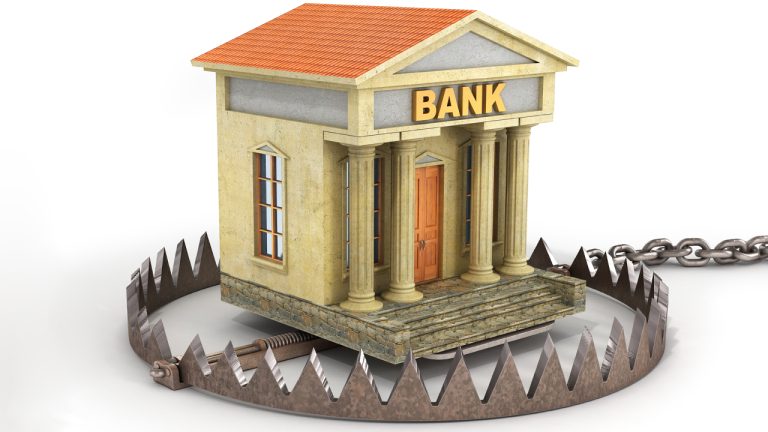
Silicon Valley Bank (SVB) has become the center of attention after its collapse prompted the U.S. Federal Deposit Insurance Corporation (FDIC) to shut the bank down on Friday. It was the largest U.S. bank failure since 2008, and various alleged catalysts have been pointed to. Some believe venture capitalists caused a bank run, while others blame the U.S. Federal Reserve’s rate hikes. Economist and gold bug Peter Schiff said on Friday that the U.S. banking system would experience more trouble ahead. He and several speculators believe that these financial institutions hold mountains of long-term treasuries.
Calls for SVB Intervention as Market Observers Predict Larger Financial Collapse in the U.S.
Over the past week, two U.S. banking institutions, Silvergate Bank and Silicon Valley Bank (SVB) failed. SVB’s collapse was the largest banking failure since Washington Mutual (Wamu) in 2008, which was blamed on expanding branches too quickly and holding massive amounts of subprime mortgages lent to so-called unqualified buyers.
Before its collapse, Wamu held $188.3 billion in deposits, while SVB is estimated to have lost around $175.4 billion in deposits. However, while SVB’s deposits at the end of December 2022 were $175.4 billion, customers attempted to remove $42 billion on Thursday alone. It’s safe to say that SVB’s demise was a lot faster than Wamu’s collapse at the end of 2008.
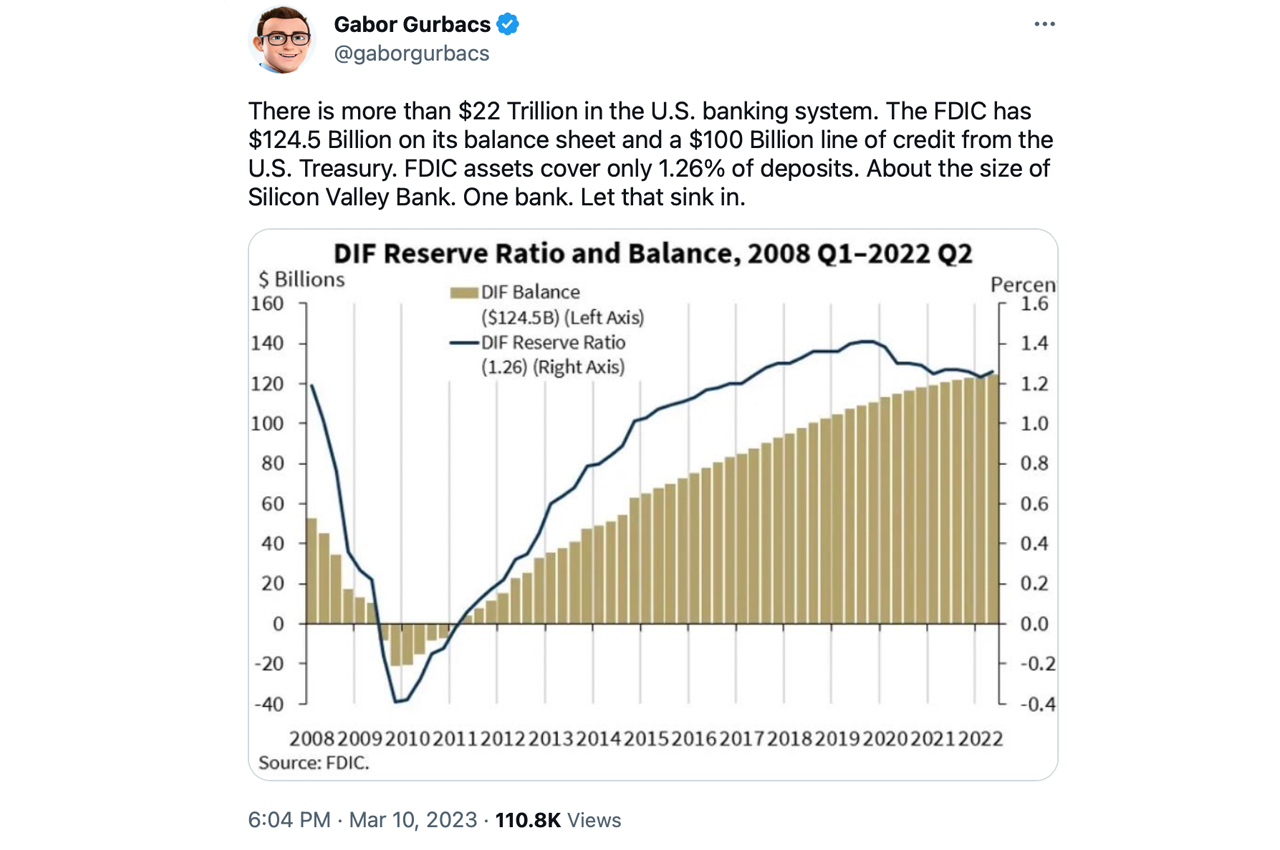
Just days before its collapse, SVB attempted to strengthen its balance sheet by announcing the need to raise $2.25 billion. The bank also sold its available-for-sale (AFS) bond portfolio for $21 billion, resulting in a $1.8 billion loss from the sale. SVB is well-known for banking tech startups and venture capital (VC) money, and some market observers believe that these clients caused a bank run.
“This was a hysteria-induced bank run caused by VCs,” said Ryan Falvey, a fintech investor at Restive Ventures, in an interview with CNBC on Friday. “This is going to be remembered as one of the ultimate cases of an industry cutting off its nose to spite its face,” he added.
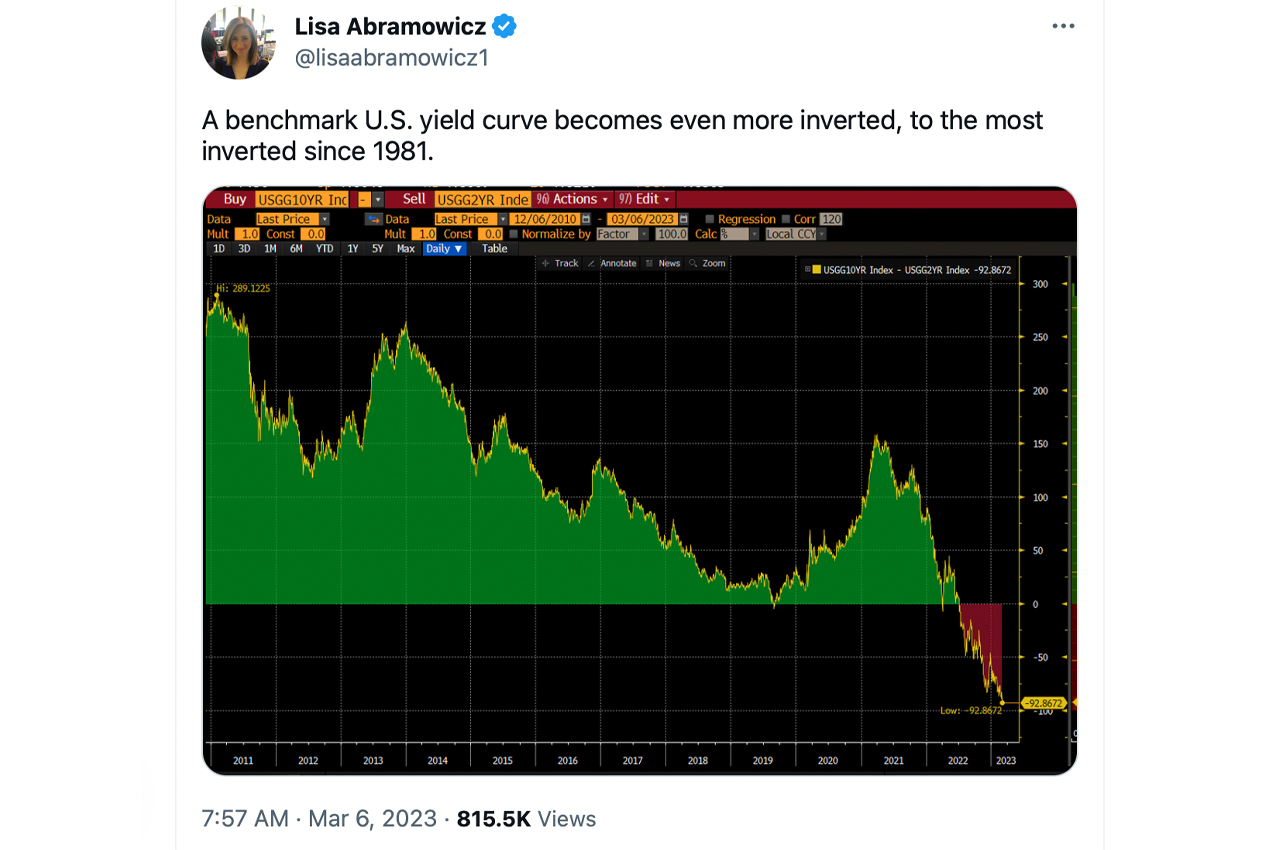
Other analysts and market observers are blaming the illogical inverted yield curve that long and short-term Treasuries are facing today, as well as the U.S. Federal Reserve rate hikes. Soona Amhaz, founder and managing partner at Volt Capital, said: “The open secret is that technically most U.S. banks are bankrupt right now, as they’re all sitting on long-duration treasuries that are underwater in a 4% interest rate environment.”
Economist and gold bug Peter Schiff shares a similar view to Amhaz, expecting a much larger financial collapse in the United States. “The U.S. banking system is on the verge of a much bigger collapse than 2008. Banks own long-term paper at extremely low-interest rates,” Schiff stated. He continued:
They can’t compete with short-term Treasuries. Mass withdrawals from depositors seeking higher yields will result in a wave of bank failures.
Craft Ventures executive David Sacks took to Twitter, calling on Powell to intervene and prevent a possible contagion. “Where is Powell? Where is Yellen? Stop this crisis NOW,” Sacks tweeted. “Announce that all depositors will be safe. Place SVB with a Top 4 bank. Do this before Monday’s opening, or there will be contagion and the crisis will spread.”
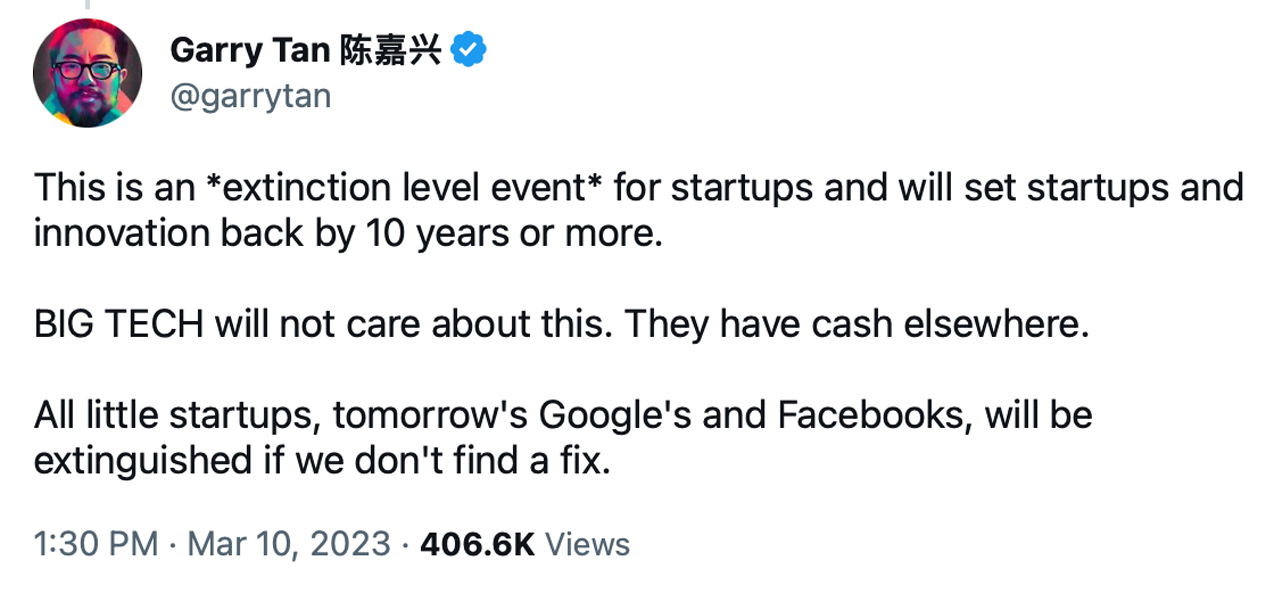
Billionaire and Galaxy Digital founder Mike Novogratz also weighed in, expressing surprise that the Fed would let depositors lose money in Silicon Valley Bank. “Are all banks going to be treated like hedge funds? Seems like a policy mistake,” Novogratz stated. Shapeshift founder Erik Voorhees ridiculed the call for Fed intervention on Twitter, stating, “Fiat is fragile.”
SVB’s issues have impacted the crypto economy, particularly the stablecoin economy backed by fiat reserves. Circle disclosed that it had $3.3 billion of cash supporting usd coin (USDC) trapped in the bank, causing USDC to unpeg from the U.S. dollar parity. As of 10:30 a.m. on March 11, 2023, USDC is trading for $0.912 per unit. This unpegging has also led to five other stablecoins losing their pegs. Furthermore, on Saturday, Coinbase, Binance, and Crypto.com temporarily suspended USDC trades and conversions.
What do you think about the opinions surrounding the SVB failure? Share your thoughts in the comments section below.
from Bitcoin News https://ift.tt/gUwKQLz
Comments
Post a Comment