
Central Bank of Nigeria Official Reiterates Nigerian Residents Free to Trade Cryptos: Directive Only Applies to Banking Sector
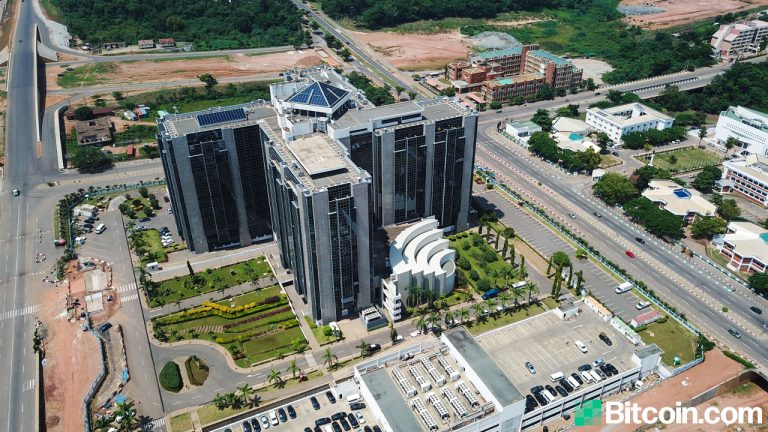
Central Bank of Nigeria Official Reiterates Nigerian Residents Free to Trade Cryptos: Directive Only Applies to Banking Sector

A senior executive with Nigeria’s central bank, Adamu Lamtek, has reportedly denied that his institution had placed restrictions on the use of cryptocurrencies. Instead, Lamtek, who is the deputy governor responsible for corporates services at the Central Bank of Nigeria (CBN), says his organisation’s directive only applies to the banking sector.

Prohibition Only Applies to Banks

The remarks by Lamtek, who spoke on behalf of the CBN governor Godwin Emefiele, follow the central bank’s February 5, 2021, directive which prohibited banks from facilitating crypto-related transactions. Immediately following the announcement, financial institutions began to comply with the directive. Since then volumes on centralized crypto exchanges have plunged while reports suggest that volumes on peer to peer platforms are on the rise.

In the meantime, before the latest communication from the CBN, rumours circulated that authorities would soon clampdown on peer to peer trading like Binance’s P2P platform. However, Lamtek, who spoke at a seminar for the country’s finance correspondents and business editors, clarified that the CBN directive did not in fact ban cryptocurrency trading.

Meanwhile, after the CBN ordered banks to stop facilitating crypto transactions, many leaders from Nigeria’s blockchain and fintech space reacted by expressing their opposition. One of these leaders, Adedayo Adedajo, the Managing Director at Jerulida Africa DLT, tells Bitcoin.com News that after extensive deliberations, many were in favour of regulating the industry rather than a total ban.

CBN Has No Power to Stop P2P Trading

As previously reported by Bitcoin.com News, this CBN prohibition has been opposed by non-crypto parties that include members of the Nigerian Senate as well as the country’s Vice President, Yemi Osinbajo. Now, according to Adebajo, this latest CBN stance on cryptocurrencies could well be a response to the voices that are opposed to a complete ban. Adebajo said:

Let’s not forget that the initial attempt only scratched the surface a bit as trading continues on the peer to peer platforms despite the CBN directives. Allowing trades to continue can’t be said to be subject to CBN’s power anymore as the financial sector has partially been decentralized.

While the CBN is not in a position to stop peer-to-peer trading, Adebajo however believes this latest clarification to be “a way forward one which we all hope with continuous effort to regulate the industry, adoption will be broad and fast.”

What do you make of the CBN’s clarification that crypto trading is not banned? Tell us what you think in the comments section below.


from Bitcoin News https://ift.tt/390Dkdt

Comments

Popular posts from this blog

Mt Gox Creditors Updated, Trustee Says Rehabilitation Custodian Is ‘Currently Preparing to Make Repayments’

On August 31, 2022, the Mt Gox trustee Nobuaki Kobayashi explained in a recent letter that the rehabilitation custodian is “currently preparing to make repayments” to Mt Gox creditors. Trustee Updates Mt Gox Creditors — Repayment Date and Exchange Still Unknown Last week speculation and rumors concerning the release of 140K bitcoin ( BTC ) from Mt Gox littered social media platforms and headlines. Bitcoin.com News covered the situation six days ago as a number of people and Mt Gox creditors called the rumors “ fake news .” During that same period of time, a bitcoin whale transferred 10,000 BTC to unknown wallets, and a 2018 annotation , heuristics, and clustering methods show the funds likely originated from the June 2011 Mt Gox hacks. Following the mysterious whale transfer, last Wednesday, Mt Gox published an official update from the court trustee Nobuaki Kobayashi that explains the court is “currently preparing to make repayments” to creditors. Mt Gox creditors have been wait...

Fidelity Discusses Bitcoin as Portfolio Insurance — Could Soon Stand in ‘Stark Contrast’ to Path Fiat Currencies Take

Fidelity Digital Assets, a subsidiary of Fidelity Investments, says that bitcoin could be considered portfolio insurance. The firm notes that the cryptocurrency “may soon stand in stark contrast to the path that the rest of the world and fiat currencies may take — namely the path of increased supply, additional currency creation, and central bank balance sheet expansion.” Fidelity Says Bitcoin Could Be Portfolio Insurance Fidelity Digital Assets, a subsidiary of Fidelity Investments, recently published a research study titled “The Rising Dollar and Bitcoin.” The research outlines “how bitcoin could be considered portfolio insurance” as the rising dollar impacts global currency markets. “The strengthening U.S. dollar is wreaking havoc among other countries and may put pressure on the Federal Reserve to soon reverse its tightening monetary actions, something that has precedent based on 1985’s Plaza Accord,” Fidelity explained. In addition, “more monetary debasement may be needed to ...

Economists Discuss Russia, China Potentially Developing Gold-Backed Currency That Could Undermine US Dollar

Economists have weighed in on reports that China and Russia may be developing a new gold-backed currency that could undermine the U.S. dollar’s status as the world’s primary reserve currency. Russia and China May Be Developing Gold-Backed Currency Several experts have shared their views on Russia and China potentially creating a new gold-baked currency, Fox Business reported Saturday, emphasizing that China has been buying up huge quantities of gold while Russia was forced off the U.S. dollar due to sanctions imposed on the country following its invasion of Ukraine. The news outlet noted that some experts have cautioned that these moves, along with the closer relationship that has developed between Moscow and Beijing, point to the likelihood of China attempting to launch a gold-backed currency. However, neither Russia nor China has officially confirmed plans for such a currency. Craig Singleton, senior fellow at the Foundation for Defense of Democracies and a former U.S. diplomat,...