
UK Bans ‘Time to Buy’ Bitcoin Ads on Buses and Underground for Being Misleading

UK Bans 'Time to Buy' Bitcoin Ads on Buses and Underground for Being Misleading

The British Advertising Standards Authority (ASA) has banned a bitcoin ad campaign put up across the London Underground network and on London buses by cryptocurrency exchange Luno. The UK advertising regulator says the ads are misleading and irresponsible.

‘Time to Buy Bitcoin’ Ads Banned in the UK

A bitcoin advertising campaign put up across London Underground and on buses has been banned by the U.K. Advertising Standards Authority (ASA). The ads contained an image of a bitcoin with the words “If you’re seeing bitcoin on a bus, it’s time to buy” or “If you’re seeing bitcoin on the Underground, it’s time to buy.” They were put up in February.

The ASA said it received four complaints. Three complainants “believed the ad failed to illustrate the risk of the investment” and “challenged whether it was misleading.” One complainant “challenged whether the ad took advantage of consumers’ inexperience or credulity,” the regulator detailed.

“We considered that consumers would interpret the statement ‘If you’re seeing bitcoin on the Underground, it’s time to buy’ as a reference to buying bitcoin as an investment,” the ASA affirmed, elaborating:

The ad appeared across the London Underground and London buses networks, which were untargeted media, and was therefore likely to have been seen by consumers who did not have extensive financial knowledge and experience of bitcoin, and would expect that the exchange of bitcoin would be regulated, with legal protection in place for investment activities.
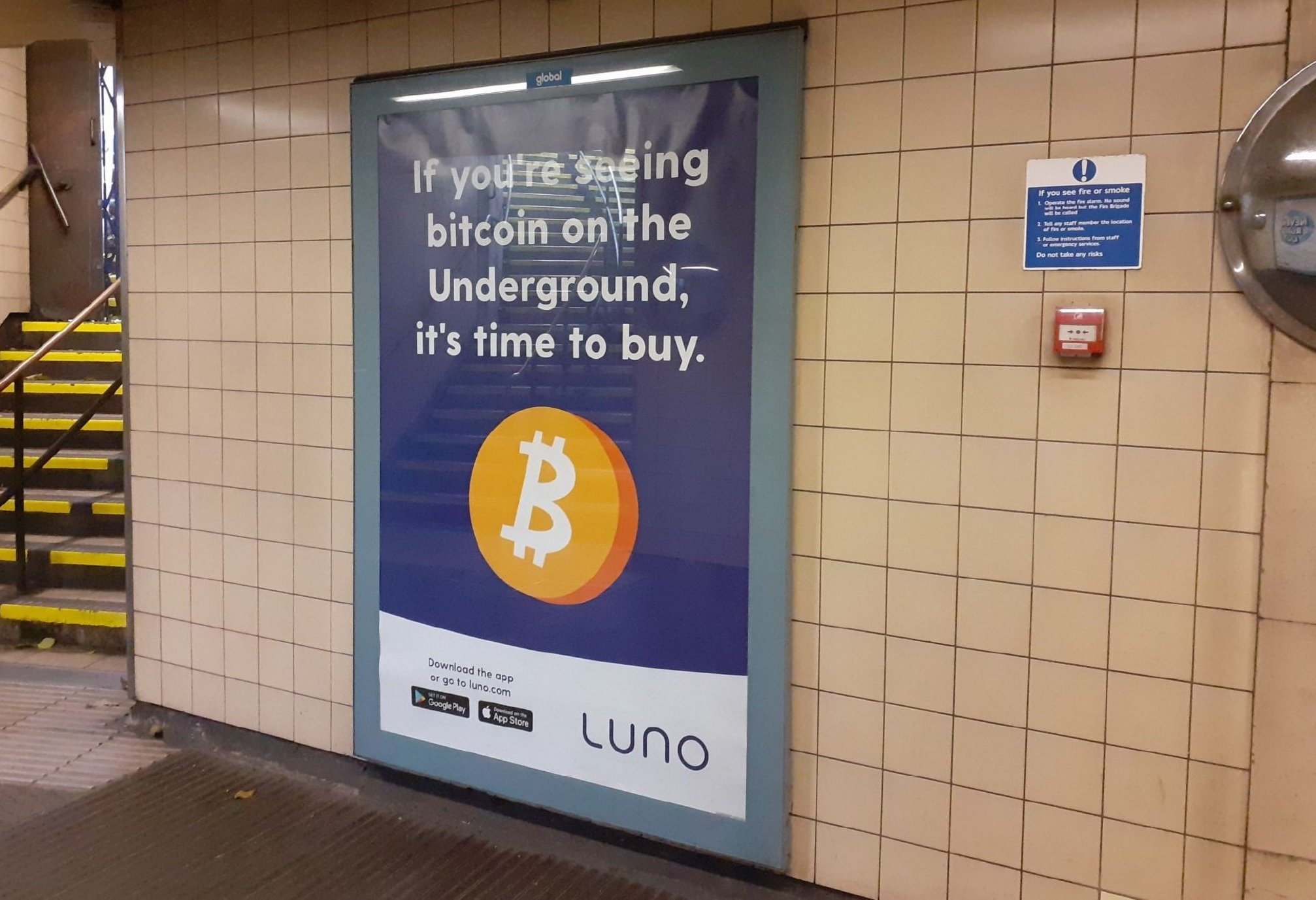
UK Authority Bans 'Time to Buy' Bitcoin Ad for Being Misleading and Irresponsible
A bitcoin ad by Luno on the London Underground. Source: ASA

“We understood that neither Luno nor the bitcoin market in general was regulated within the UK, and therefore consumers could not seek recourse to services such as the Financial Services Compensation Scheme or the Financial Ombudsman Service,” the ASA noted, adding:

We therefore concluded that the ad was misleading.

The agency further said: “We considered that consumers would interpret the statement ‘it’s time to buy’ as a call to action and that the simplicity of the statement gave the impression that bitcoin investment was straightforward and accessible.”

However, the advertising regulator stated that “Bitcoin investment was complex, volatile, and could expose investors to losses and considered that stood in contrast to the impression given by the ad, that investment was simple and conventional.” The agency then detailed:

We concluded that the ad irresponsibly suggested that engaging in bitcoin investment through Luno was straightforward and easy, particularly given that the audience it addressed, the general public, were likely to be inexperienced in their understanding of cryptocurrencies, and was therefore in breach of the Code.

Luno Money Ltd., which put up the ads, told the ASA that “the ads would not appear again in the form complained about,” adding that “their future ads would feature an appropriate risk warning.”

What do you think about the ASA’s reasons for banning these bitcoin ads? Let us know in the comments section below.


from Bitcoin News https://ift.tt/3bVDrZ8

Comments

Popular posts from this blog

Mt Gox Creditors Updated, Trustee Says Rehabilitation Custodian Is ‘Currently Preparing to Make Repayments’

On August 31, 2022, the Mt Gox trustee Nobuaki Kobayashi explained in a recent letter that the rehabilitation custodian is “currently preparing to make repayments” to Mt Gox creditors. Trustee Updates Mt Gox Creditors — Repayment Date and Exchange Still Unknown Last week speculation and rumors concerning the release of 140K bitcoin ( BTC ) from Mt Gox littered social media platforms and headlines. Bitcoin.com News covered the situation six days ago as a number of people and Mt Gox creditors called the rumors “ fake news .” During that same period of time, a bitcoin whale transferred 10,000 BTC to unknown wallets, and a 2018 annotation , heuristics, and clustering methods show the funds likely originated from the June 2011 Mt Gox hacks. Following the mysterious whale transfer, last Wednesday, Mt Gox published an official update from the court trustee Nobuaki Kobayashi that explains the court is “currently preparing to make repayments” to creditors. Mt Gox creditors have been wait...

Economists Discuss Russia, China Potentially Developing Gold-Backed Currency That Could Undermine US Dollar

Economists have weighed in on reports that China and Russia may be developing a new gold-backed currency that could undermine the U.S. dollar’s status as the world’s primary reserve currency. Russia and China May Be Developing Gold-Backed Currency Several experts have shared their views on Russia and China potentially creating a new gold-baked currency, Fox Business reported Saturday, emphasizing that China has been buying up huge quantities of gold while Russia was forced off the U.S. dollar due to sanctions imposed on the country following its invasion of Ukraine. The news outlet noted that some experts have cautioned that these moves, along with the closer relationship that has developed between Moscow and Beijing, point to the likelihood of China attempting to launch a gold-backed currency. However, neither Russia nor China has officially confirmed plans for such a currency. Craig Singleton, senior fellow at the Foundation for Defense of Democracies and a former U.S. diplomat,...

Fidelity Discusses Bitcoin as Portfolio Insurance — Could Soon Stand in ‘Stark Contrast’ to Path Fiat Currencies Take

Fidelity Digital Assets, a subsidiary of Fidelity Investments, says that bitcoin could be considered portfolio insurance. The firm notes that the cryptocurrency “may soon stand in stark contrast to the path that the rest of the world and fiat currencies may take — namely the path of increased supply, additional currency creation, and central bank balance sheet expansion.” Fidelity Says Bitcoin Could Be Portfolio Insurance Fidelity Digital Assets, a subsidiary of Fidelity Investments, recently published a research study titled “The Rising Dollar and Bitcoin.” The research outlines “how bitcoin could be considered portfolio insurance” as the rising dollar impacts global currency markets. “The strengthening U.S. dollar is wreaking havoc among other countries and may put pressure on the Federal Reserve to soon reverse its tightening monetary actions, something that has precedent based on 1985’s Plaza Accord,” Fidelity explained. In addition, “more monetary debasement may be needed to ...