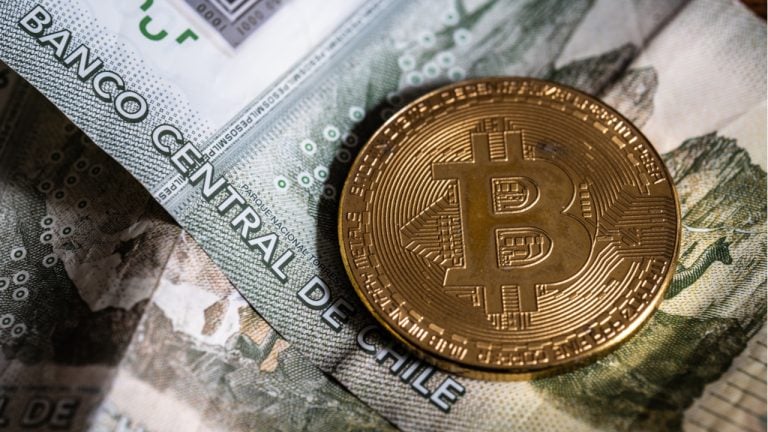
After Years of Uncertainty, Cryptocurrency Exchanges Can Open Bank Accounts in Chile

chile

After years of court battles in Chile, a cryptocurrency exchange has managed to open a bank account in Bci, a financial institution that established a protocol to serve these businesses. The first exchange that opened a bank account with the institution was Buda, a local exchange, which satisfied the requirements of the bank in the mentioned protocol.

Cryptocurrency Exchanges Can Now Open Bank Accounts in Chile

On Oct. 28, Bci, a bank in Chile, announced that it had developed a protocol to allow cryptocurrency exchanges to open checking accounts with the institution. This marks a milestone for cryptocurrency exchanges in the country, which had been fighting for the right to use traditional banking services for years.

The protocol developed includes a series of requirements inspired by recommendations issued by the Financial Action Task Force (FATF), which include the fulfillment of compliance processes, traceability of transactions, prevention of money laundering, financing of terrorism, and audit reports from an outside company.

A spokesperson for the bank told the local newspaper Diario Financiero that this move would be beneficial for customers of the exchanges. The bank stated:

Our objective is to accompany their clients so that they can operate in this market within a framework of security and trust.

First Account Opened

The history of the battle between cryptocurrency exchanges and banks in Chile goes back to 2018, when Buda and Crypto MKT, two local cryptocurrency exchanges, started a court battle to be able to enjoy banking services after their accounts were closed. The legal battle continues to this day, as the exchanges declare that banks are abusing their power position to cripple the possible competition that alternate financial systems including cryptocurrency might pose for them.

Buda, which is one of the exchanges still embroiled in the mentioned judicial battle with other banks, was the first cryptocurrency exchange to open a checking account in Bci, after signing an agreement with the bank. This agreement also allows other exchanges to seek banking services with the institution, having to fulfill the requirements stipulated in the established procedure.

On this development, Buda CEO Guillermo Torrealba stated:

We are happy with this agreement and grateful for Banco Bci’s vision. Sooner rather than later, cryptocurrencies will be a fundamental part of banking and we want to help accelerate that moment.

In other countries of Latam, banks have been more open to offering cryptocurrency-related services, like Santander, which already has a cryptocurrency asset division and is planning to offer cryptocurrency services to its customers in Brasil.

What do you think about Bci opening banking services to crypto exchanges in Chile? Tell us in the comments section below.


from Bitcoin News https://ift.tt/xuGAbsk

Comments

Popular posts from this blog

Mt Gox Creditors Updated, Trustee Says Rehabilitation Custodian Is ‘Currently Preparing to Make Repayments’

On August 31, 2022, the Mt Gox trustee Nobuaki Kobayashi explained in a recent letter that the rehabilitation custodian is “currently preparing to make repayments” to Mt Gox creditors. Trustee Updates Mt Gox Creditors — Repayment Date and Exchange Still Unknown Last week speculation and rumors concerning the release of 140K bitcoin ( BTC ) from Mt Gox littered social media platforms and headlines. Bitcoin.com News covered the situation six days ago as a number of people and Mt Gox creditors called the rumors “ fake news .” During that same period of time, a bitcoin whale transferred 10,000 BTC to unknown wallets, and a 2018 annotation , heuristics, and clustering methods show the funds likely originated from the June 2011 Mt Gox hacks. Following the mysterious whale transfer, last Wednesday, Mt Gox published an official update from the court trustee Nobuaki Kobayashi that explains the court is “currently preparing to make repayments” to creditors. Mt Gox creditors have been wait...

Economists Discuss Russia, China Potentially Developing Gold-Backed Currency That Could Undermine US Dollar

Economists have weighed in on reports that China and Russia may be developing a new gold-backed currency that could undermine the U.S. dollar’s status as the world’s primary reserve currency. Russia and China May Be Developing Gold-Backed Currency Several experts have shared their views on Russia and China potentially creating a new gold-baked currency, Fox Business reported Saturday, emphasizing that China has been buying up huge quantities of gold while Russia was forced off the U.S. dollar due to sanctions imposed on the country following its invasion of Ukraine. The news outlet noted that some experts have cautioned that these moves, along with the closer relationship that has developed between Moscow and Beijing, point to the likelihood of China attempting to launch a gold-backed currency. However, neither Russia nor China has officially confirmed plans for such a currency. Craig Singleton, senior fellow at the Foundation for Defense of Democracies and a former U.S. diplomat,...

Fidelity Discusses Bitcoin as Portfolio Insurance — Could Soon Stand in ‘Stark Contrast’ to Path Fiat Currencies Take

Fidelity Digital Assets, a subsidiary of Fidelity Investments, says that bitcoin could be considered portfolio insurance. The firm notes that the cryptocurrency “may soon stand in stark contrast to the path that the rest of the world and fiat currencies may take — namely the path of increased supply, additional currency creation, and central bank balance sheet expansion.” Fidelity Says Bitcoin Could Be Portfolio Insurance Fidelity Digital Assets, a subsidiary of Fidelity Investments, recently published a research study titled “The Rising Dollar and Bitcoin.” The research outlines “how bitcoin could be considered portfolio insurance” as the rising dollar impacts global currency markets. “The strengthening U.S. dollar is wreaking havoc among other countries and may put pressure on the Federal Reserve to soon reverse its tightening monetary actions, something that has precedent based on 1985’s Plaza Accord,” Fidelity explained. In addition, “more monetary debasement may be needed to ...