Kazakhstan President Orders Government to Find All Miners and Raise Tax by April

Kazakhstan President Orders Government to Find All Miners and Raise Tax by April

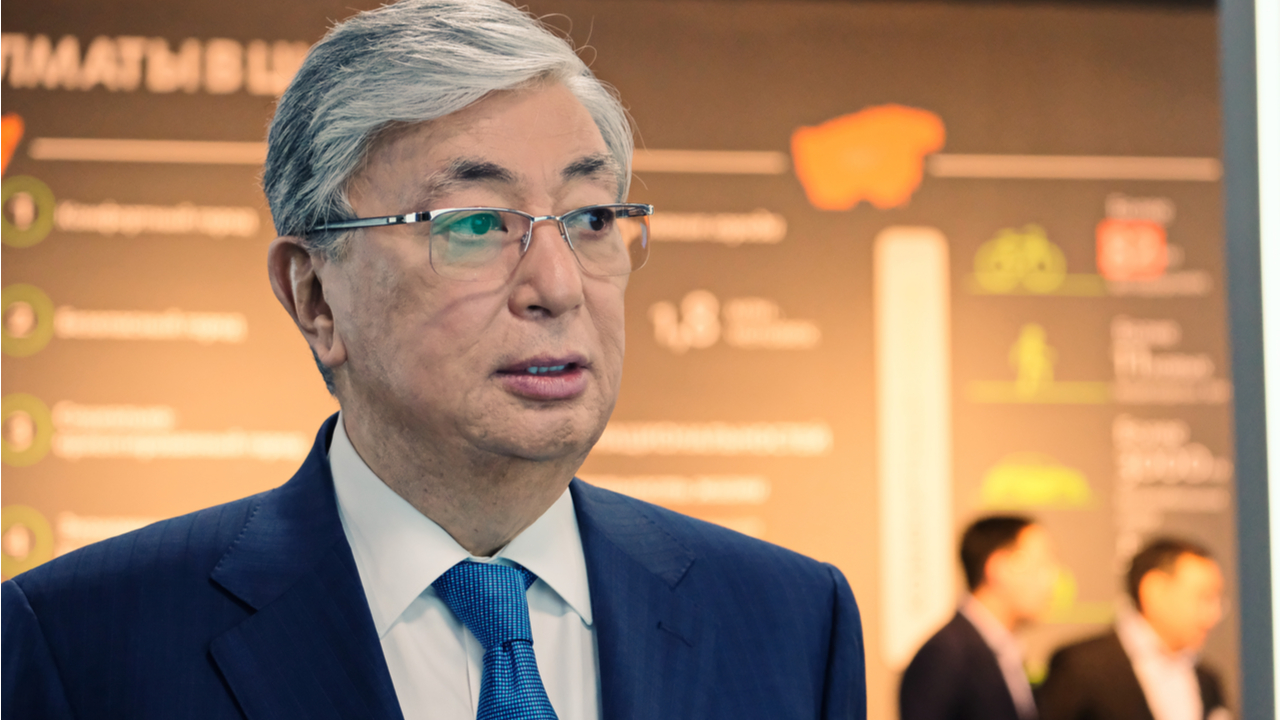
President of Kazakhstan Kassym-Jomart Tokayev has instructed authorities to identify all crypto mining enterprises and increase the electricity surcharge they are required to pay. The state is not against legal mining activities, but crypto farms should be licensed and taxed, Tokayev insisted.

Miners in Kazakhstan to Pay Higher Electricity Tariffs

On top of electricity shortages that have already forced some companies to leave Kazakhstan, crypto miners are now facing a tax hike and stricter oversight. At a meeting with ministers this week, President Kassym-Jomart Tokayev ordered the government to prepare comprehensive regulations for the industry by April 1, making sure its members fulfill their obligations.

Local media reported this week that authorities in the Central Asian nation are considering a fivefold increase of the electricity tax miners are expected to pay. Last summer, Kazakhstan introduced a surcharge of 1 tenge (approx. $0.0023) per kilowatt-hour used to mint digital currencies. Quoted by Tengrinews, Tokayev said:

The current rate is negligible. I instruct the government to work out a multiple increase of this tax as soon as possible.

The head of state elaborated that the socio-economic effect of the mining business is minimal, noting that the sector does not create many jobs or products but consumes a lot of energy. In some cases, miners use subsidized electricity and do not pay duties on imported equipment while cashing out their profits in other jurisdictions.

Kassym-Jomart Tokayev emphasized that the state is not against legal crypto mining but insisted that all mining facilities should be identified and their tax, customs, and technical documentation inspected. He tasked the Financial Monitoring Agency to look into the situation in detail and report back by March 15.

“Those who want to work in this field must have an appropriate license, receive electricity at adequate tariffs, declare income and pay taxes, launch green energy projects,” the president added.

Kazakhstan has become a major mining hotspot since China launched a crackdown on the sector in May of last year. As of August 2021, the country’s share in the global bitcoin hashrate had reached 18%, second only to that of the United States.

Miners were initially welcomed by Kazakhstan, but its growing power deficit has been blamed on the energy-intensive industry. The country had to increase electricity imports from neighboring Russia, and recently shut down mining farms amid winter blackouts.

Mass protests over rising energy costs, mainly the prices of fuels such as natural gas, erupted in the first days of January, threatening Tokayev’s administration. To quell the unrest, the government temporarily closed down local banks and restricted access to the internet which also affected crypto miners.

Do you think most mining companies will remain in Kazakhstan despite the stricter oversight and upcoming tax increase? Share your expectations in the comments section below.


from Bitcoin News https://ift.tt/lOJvI3G

Comments

Popular posts from this blog

Mt Gox Creditors Updated, Trustee Says Rehabilitation Custodian Is ‘Currently Preparing to Make Repayments’

On August 31, 2022, the Mt Gox trustee Nobuaki Kobayashi explained in a recent letter that the rehabilitation custodian is “currently preparing to make repayments” to Mt Gox creditors. Trustee Updates Mt Gox Creditors — Repayment Date and Exchange Still Unknown Last week speculation and rumors concerning the release of 140K bitcoin ( BTC ) from Mt Gox littered social media platforms and headlines. Bitcoin.com News covered the situation six days ago as a number of people and Mt Gox creditors called the rumors “ fake news .” During that same period of time, a bitcoin whale transferred 10,000 BTC to unknown wallets, and a 2018 annotation , heuristics, and clustering methods show the funds likely originated from the June 2011 Mt Gox hacks. Following the mysterious whale transfer, last Wednesday, Mt Gox published an official update from the court trustee Nobuaki Kobayashi that explains the court is “currently preparing to make repayments” to creditors. Mt Gox creditors have been wait...

Fidelity Discusses Bitcoin as Portfolio Insurance — Could Soon Stand in ‘Stark Contrast’ to Path Fiat Currencies Take

Fidelity Digital Assets, a subsidiary of Fidelity Investments, says that bitcoin could be considered portfolio insurance. The firm notes that the cryptocurrency “may soon stand in stark contrast to the path that the rest of the world and fiat currencies may take — namely the path of increased supply, additional currency creation, and central bank balance sheet expansion.” Fidelity Says Bitcoin Could Be Portfolio Insurance Fidelity Digital Assets, a subsidiary of Fidelity Investments, recently published a research study titled “The Rising Dollar and Bitcoin.” The research outlines “how bitcoin could be considered portfolio insurance” as the rising dollar impacts global currency markets. “The strengthening U.S. dollar is wreaking havoc among other countries and may put pressure on the Federal Reserve to soon reverse its tightening monetary actions, something that has precedent based on 1985’s Plaza Accord,” Fidelity explained. In addition, “more monetary debasement may be needed to ...

Economists Discuss Russia, China Potentially Developing Gold-Backed Currency That Could Undermine US Dollar

Economists have weighed in on reports that China and Russia may be developing a new gold-backed currency that could undermine the U.S. dollar’s status as the world’s primary reserve currency. Russia and China May Be Developing Gold-Backed Currency Several experts have shared their views on Russia and China potentially creating a new gold-baked currency, Fox Business reported Saturday, emphasizing that China has been buying up huge quantities of gold while Russia was forced off the U.S. dollar due to sanctions imposed on the country following its invasion of Ukraine. The news outlet noted that some experts have cautioned that these moves, along with the closer relationship that has developed between Moscow and Beijing, point to the likelihood of China attempting to launch a gold-backed currency. However, neither Russia nor China has officially confirmed plans for such a currency. Craig Singleton, senior fellow at the Foundation for Defense of Democracies and a former U.S. diplomat,...