Tonk Is Building a Provability-Focused Onchain Nintendo Emulator

Tonk Is Building a Provability-Focused Onchain Nintendo Emulator

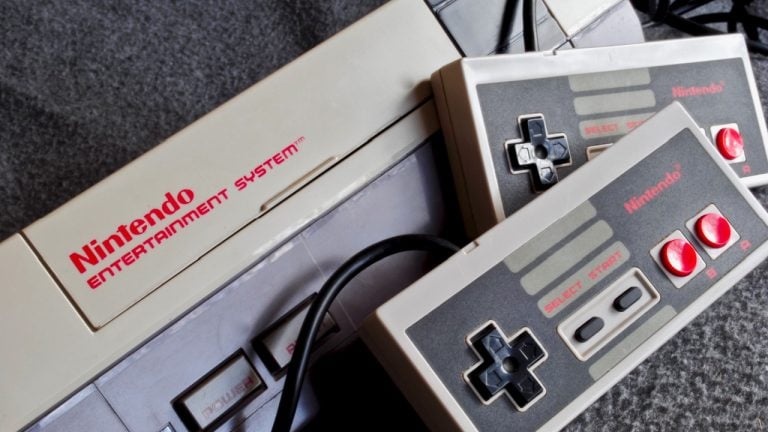
Tonk, a programming collective focusing on onchain gaming, has announced a blockchain-based Nintendo Entertainment System (NES) emulator called Dappicom. The app, being coded using Noir, a smart contract-enabled privacy-focused language, will allow players to prove they have achieved in-game milestones without showing how.

Tonk Announces Dappicom, a Provability-Focused NES Emulator

Tonk, a gaming-oriented programming team, has announced it is working on Dappicom, a Nintendo Entertainment System (NES) emulator that will allow users to play and enjoy old gaming classics onchain. Furthermore, Tonk focuses on the probability part of the gaming equation, using mathematical proofs to power this part of its functionality.

Dappicom is being coded using Noir, a language that uses zero-knowledge (ZK) technology for its objective. The emulator is designed to appeal to the retro gaming community, which will be able to prove they completed various challenges and quests without having to screencap the whole ordeal, as it is currently done.

For this, the app leverages an NES state machine that sends information to a server, which uses the info to construct a proof of the gameplay executed by the players, certifying the validity of their claims without giving away the techniques used for their accomplishments. Tonk explained this would be a world first, helping players to prove they completed tasks in a certain amount of time without a doubt.

Tonk stated:

Proving speedruns with hidden strategies has never been done before. Speedruns are often contested … You can’t argue with maths, though.

Such gameplay can be rewarded by companies or third parties with badges or other awards.

Origin and Motivation

Tonk stated that the idea of building an on-chain-powered NES emulator came after the creation of “Snarky Monsters,” a Pokemon-inspired game where non-playable characters have “secret psychology,” meaning that there is no way of knowing the stats of any character beforehand.

A battle server utility coded for this game was used to create a virtual machine for holding gaming secrets. This prototype morphed into what Dappicom is today.

Tonk stresses that Dappicom is being built to widen the audience of blockchain games and move away from crypto-focused gamers who only care about earning tokens, explaining that the app doesn’t “require a token and nor does it fit the play-to-earn model, which has a controversial reputation in gaming.” Dappicom’s target is the retro gaming scene, which is outside of the crypto realm.

Dappicom is still in its pre-alpha stages, and Tonk is establishing a community to shape the project and deliver a live demo.

What do you think about Tonk and Dappicom? Tell us in the comments section below.


from Bitcoin News https://ift.tt/wqIYvdZ

Comments

Popular posts from this blog

Mt Gox Creditors Updated, Trustee Says Rehabilitation Custodian Is ‘Currently Preparing to Make Repayments’

On August 31, 2022, the Mt Gox trustee Nobuaki Kobayashi explained in a recent letter that the rehabilitation custodian is “currently preparing to make repayments” to Mt Gox creditors. Trustee Updates Mt Gox Creditors — Repayment Date and Exchange Still Unknown Last week speculation and rumors concerning the release of 140K bitcoin ( BTC ) from Mt Gox littered social media platforms and headlines. Bitcoin.com News covered the situation six days ago as a number of people and Mt Gox creditors called the rumors “ fake news .” During that same period of time, a bitcoin whale transferred 10,000 BTC to unknown wallets, and a 2018 annotation , heuristics, and clustering methods show the funds likely originated from the June 2011 Mt Gox hacks. Following the mysterious whale transfer, last Wednesday, Mt Gox published an official update from the court trustee Nobuaki Kobayashi that explains the court is “currently preparing to make repayments” to creditors. Mt Gox creditors have been wait...

Economists Discuss Russia, China Potentially Developing Gold-Backed Currency That Could Undermine US Dollar

Economists have weighed in on reports that China and Russia may be developing a new gold-backed currency that could undermine the U.S. dollar’s status as the world’s primary reserve currency. Russia and China May Be Developing Gold-Backed Currency Several experts have shared their views on Russia and China potentially creating a new gold-baked currency, Fox Business reported Saturday, emphasizing that China has been buying up huge quantities of gold while Russia was forced off the U.S. dollar due to sanctions imposed on the country following its invasion of Ukraine. The news outlet noted that some experts have cautioned that these moves, along with the closer relationship that has developed between Moscow and Beijing, point to the likelihood of China attempting to launch a gold-backed currency. However, neither Russia nor China has officially confirmed plans for such a currency. Craig Singleton, senior fellow at the Foundation for Defense of Democracies and a former U.S. diplomat,...

Fidelity Discusses Bitcoin as Portfolio Insurance — Could Soon Stand in ‘Stark Contrast’ to Path Fiat Currencies Take

Fidelity Digital Assets, a subsidiary of Fidelity Investments, says that bitcoin could be considered portfolio insurance. The firm notes that the cryptocurrency “may soon stand in stark contrast to the path that the rest of the world and fiat currencies may take — namely the path of increased supply, additional currency creation, and central bank balance sheet expansion.” Fidelity Says Bitcoin Could Be Portfolio Insurance Fidelity Digital Assets, a subsidiary of Fidelity Investments, recently published a research study titled “The Rising Dollar and Bitcoin.” The research outlines “how bitcoin could be considered portfolio insurance” as the rising dollar impacts global currency markets. “The strengthening U.S. dollar is wreaking havoc among other countries and may put pressure on the Federal Reserve to soon reverse its tightening monetary actions, something that has precedent based on 1985’s Plaza Accord,” Fidelity explained. In addition, “more monetary debasement may be needed to ...