Macro Strategist David Hunter Predicts Global Markets Melt Up Surge in Q4 2023 Followed by Impending Bust
David Hunter, the chief macro strategist at Contrarian Macro Advisors, predicts an interesting development for global markets in the fourth quarter of 2023. According to him, global markets will experience a remarkable surge, aptly described as a “melt up.” However, this surge will be short-lived, as a substantial downturn is expected to follow. Hunter emphasizes that after this rise and fall, we won’t witness the same lofty peaks of the 41-year secular bull cycle for many years to come.
Contrarian Macro Advisors Exec Anticipates Global Markets’ ‘Melt Up’ in Q4 2023, Warns 80% Downturn Will Follow
In an interview with Kitco News’ lead anchor and editor-in-chief, Michelle Makori, David Hunter delved into the realm of the economy, unraveling a compelling narrative of a potential “melt up” scenario. Renowned for his remarkable knack for forecasting economic cycles and identifying market trends ahead of the curve, Hunter unveiled his forecast.
He painted a picture of the S&P 500 soaring by a staggering 36%, while the value of gold would ascend to $3,000 per ounce by October. However, Hunter cautioned that these bullish scenarios will be fleeting, as an imminent and significant market bust looms on the horizon, paving the way for a profound recession.
“My S&P target is six to seven thousand,” Hunter explained during his interview with Makori. “My targets are gold to $3,000 pre-bust and silver to $60 pre-bust … We’ll probably see most of the melt-up move by the end of the summer, which could mean Labor Day, but it could stretch into September.”
So what exactly is a melt up? Traditionally, these market phenomena resemble bull traps, serving as deceptive and unreliable signals of an impending market surge. The gains experienced during a melt up are often viewed with skepticism because, despite the temporary upward momentum, the underlying fundamentals of the market continue to deteriorate. Throughout history, melt-ups have frequently paved the way for subsequent meltdowns, reminiscent of the notable ‘Fall Melt-Up of 2011,’ aptly dubbed the ‘Great Surprise.’
Hunter suggests that we have found ourselves nearing the culmination of a significant 41-year secular bull run that commenced in 1982. Hunter stressed:
That is when the disinflation trend began and interest rates peaked out. I think the highs of this bull market will not likely be seen again for decades.
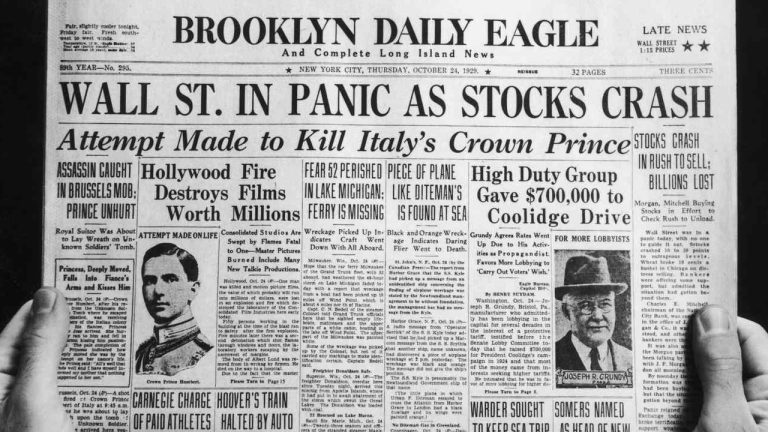
Throughout the turbulent economic history of the United States, significant transformations such as the notorious ‘Great Depression’ and the formidable ‘Great Recession’ were marked by the occurrence of tantalizing melt-ups. These preludes to market busts enticed investors with their deceptive allure. Prior to the infamous stock market crash in 1929, an extended period of prosperity propelled stock prices to unprecedented heights, witnessing a staggering quadrupling in value from 1920 to 1929. Fueled by misguided optimism, investors fell victim to the illusory signals of the melt-up, succumbing to the temptation of borrowing extensively to pour more funds into the market.
According to Hunter, the U.S. Federal Reserve’s implementation of quantitative tightening measures has surpassed the optimal threshold, pushing it into the realm of going “too far.” Economist Steve Hanke echoes this sentiment, as he recently emphasized that the current monetary tightening bears an uncanny resemblance to the contractionary policies witnessed in “1938 or 1939.” In a recent interview, Hanke drew attention to the parallels between the present circumstances and the historical instances of economic shrinkage. While speaking with Makori, Hunter insists “We are in uncharted territory.”
“The formula is, really, economic fragility caused by the pandemic, plus potentially the biggest policy error [over-tightening] in history by central banks, and plus leverage,” Hunter said. “You’ve got a formula which takes a normal recession into something far worse.”
Hunter explained that the type of “bust” he envisions will entail markets recording an 80% drawdown, and while he predicts gold will reach an all-time high this year, precious metals like gold and silver will drop back to today’s levels. “I don’t think very many assets are going to be able to escape a deflationary bust,” Hunter added. The macro strategist concluded, however, that gold and silver will see upsides following the bust, and both could rise ten times higher in value after the bottom.
What are your thoughts on David Hunter’s forecast of a ‘melt up’ followed by a significant market downturn? Share your thoughts and opinions about this subject in the comments section below.
from Bitcoin News https://ift.tt/ruOBL6w
Comments
Post a Comment