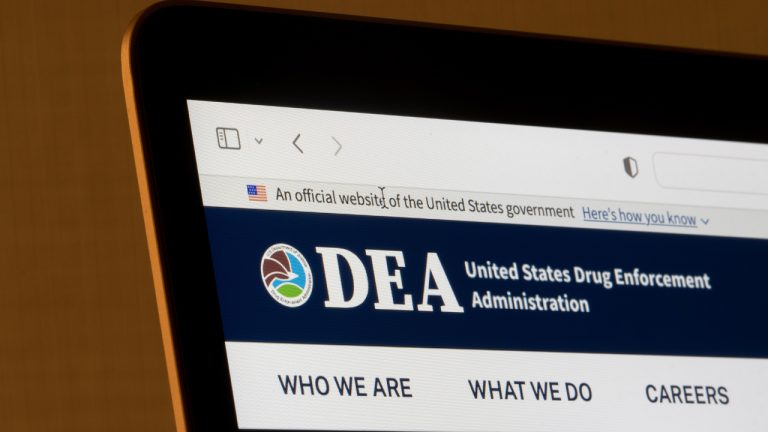
DEA Duped: How a Crafty Crypto Scammer Outwitted the Agency and Made Off With $55K

DEA Duped: How a Crafty Crypto Scammer Outwitted the Agency and Made Off With $55K

In a revealing report published on August 24, 2023, a significant oversight by the Drug Enforcement Agency (DEA) was brought to light. In their endeavor to manage assets confiscated from a nefarious enterprise, the DEA mistakenly funneled funds to an unrelated scammer, falling prey to a notorious crypto dusting scam.

Blockchain Blunder: DEA Mistakenly Transfers $55K to Crafty Scammer

Previously this year, the DEA suffered a setback, losing over $50,000 to a rampant cryptocurrency con. This hefty sum had been seized over a long three-year probe into the use of digital currencies for suspected drug money laundering, as chronicled by Forbes’ Thomas Brewster.

Come May, the DEA undertook a massive seizure, capturing nearly $500,000 in the stable cryptocurrency, tether (USDT). This operation pinpointed two Binance accounts believed to be channels for the illicit flow of drug-tainted proceeds. A search warrant, available to Forbes, verified this narrative.

In a bid for security, the DEA transferred these assets to their vaulted accounts. They were subsequently housed in a Trezor hardware wallet, safely tucked away in a fortified location. But, unbeknownst to the DEA, an astute fraudster had their eyes glued to the blockchain.

Detecting the DEA’s trial transaction — a mere $45.36 in tether sent to the U.S. Marshals — the fraudster saw an opportunity and pounced. Employing a method dubbed “dusting,” the trickster dispatched a minuscule fraction of USDT to the DEA’s digital coffer.

This subtle transaction laid the groundwork for a snare. The DEA’s crypto wallet, upon acknowledging this trifling deposit, laid its defenses bare. Hoping to ensnare the funds’ custodian, the scammer anticipated the owner would mistake the dusting address for a legitimate U.S. Marshals’ one.

Interestingly, the ruse proved successful. The DEA, misled by the fraudulent address, unwittingly dispatched $55,000 in tether to the impostor. Jolted by this misstep, the DEA sprang into action, seeking the diverted funds.

Teaming up with Binance, they pinpointed the accounts tied to the scam. However, the money had vanished — morphed into bitcoin (BTC) and dispersed amidst a sea of wallets, leaving recovery an uphill battle. Brewster further detailed that the DEA and the Federal Bureau of Investigation (FBI) declined to comment on the mishap.

What do you think about the DEA’s mistake? Share your thoughts and opinions about this subject in the comments section below.


from Bitcoin News https://ift.tt/ejVRda4

Comments

Popular posts from this blog

Mt Gox Creditors Updated, Trustee Says Rehabilitation Custodian Is ‘Currently Preparing to Make Repayments’

On August 31, 2022, the Mt Gox trustee Nobuaki Kobayashi explained in a recent letter that the rehabilitation custodian is “currently preparing to make repayments” to Mt Gox creditors. Trustee Updates Mt Gox Creditors — Repayment Date and Exchange Still Unknown Last week speculation and rumors concerning the release of 140K bitcoin ( BTC ) from Mt Gox littered social media platforms and headlines. Bitcoin.com News covered the situation six days ago as a number of people and Mt Gox creditors called the rumors “ fake news .” During that same period of time, a bitcoin whale transferred 10,000 BTC to unknown wallets, and a 2018 annotation , heuristics, and clustering methods show the funds likely originated from the June 2011 Mt Gox hacks. Following the mysterious whale transfer, last Wednesday, Mt Gox published an official update from the court trustee Nobuaki Kobayashi that explains the court is “currently preparing to make repayments” to creditors. Mt Gox creditors have been wait...

Fidelity Discusses Bitcoin as Portfolio Insurance — Could Soon Stand in ‘Stark Contrast’ to Path Fiat Currencies Take

Fidelity Digital Assets, a subsidiary of Fidelity Investments, says that bitcoin could be considered portfolio insurance. The firm notes that the cryptocurrency “may soon stand in stark contrast to the path that the rest of the world and fiat currencies may take — namely the path of increased supply, additional currency creation, and central bank balance sheet expansion.” Fidelity Says Bitcoin Could Be Portfolio Insurance Fidelity Digital Assets, a subsidiary of Fidelity Investments, recently published a research study titled “The Rising Dollar and Bitcoin.” The research outlines “how bitcoin could be considered portfolio insurance” as the rising dollar impacts global currency markets. “The strengthening U.S. dollar is wreaking havoc among other countries and may put pressure on the Federal Reserve to soon reverse its tightening monetary actions, something that has precedent based on 1985’s Plaza Accord,” Fidelity explained. In addition, “more monetary debasement may be needed to ...

Economists Discuss Russia, China Potentially Developing Gold-Backed Currency That Could Undermine US Dollar

Economists have weighed in on reports that China and Russia may be developing a new gold-backed currency that could undermine the U.S. dollar’s status as the world’s primary reserve currency. Russia and China May Be Developing Gold-Backed Currency Several experts have shared their views on Russia and China potentially creating a new gold-baked currency, Fox Business reported Saturday, emphasizing that China has been buying up huge quantities of gold while Russia was forced off the U.S. dollar due to sanctions imposed on the country following its invasion of Ukraine. The news outlet noted that some experts have cautioned that these moves, along with the closer relationship that has developed between Moscow and Beijing, point to the likelihood of China attempting to launch a gold-backed currency. However, neither Russia nor China has officially confirmed plans for such a currency. Craig Singleton, senior fellow at the Foundation for Defense of Democracies and a former U.S. diplomat,...